Why AI Agents Are the Best Prediction Market Traders
 Ryan Bajollari
Prediction markets reward fast information processing, emotional discipline, and 24/7 availability. Here's why AI agents have a structural edge.
There's a dirty secret in prediction markets: the best traders aren't people.
During the 2024 US presidential election, Polymarket processed over $3.5 billion in volume. A significant chunk of that came from automated systems — bots that could react to polling data, news events, and price dislocations faster than any human could open a browser tab.
This isn't a fluke. Prediction markets have structural properties that make them uniquely suited to AI agent trading. Let's break down why.
The Information Processing Problem
Prediction markets are fundamentally about one thing: pricing the probability of real-world events. The traders who win are the ones who process new information fastest and most accurately.
Think about what that requires:
- Monitoring dozens of data sources simultaneously — news feeds, social media, economic releases, polling aggregators
- Updating probability estimates in real time as new information arrives
- Executing trades before the market fully prices in the new information
A human trader might follow three or four markets closely. An AI agent can monitor every contract on an exchange, cross-reference multiple data streams, and execute in milliseconds. The gap isn't close.
Emotional Discipline at Scale
Every trader knows the theory: buy when others are fearful, sell when others are greedy. In practice, humans are terrible at this.
Prediction markets amplify emotional trading because the events they track — elections, economic crises, geopolitical events — are inherently emotional. When a surprising headline drops, human traders panic-buy or panic-sell. Prices overshoot.
AI agents don't panic. They don't get excited by a trending tweet. They execute the strategy as defined, every single time. In a market where overreaction creates the best opportunities, emotional neutrality is a superpower.
The 24/7 Advantage
Prediction markets don't close. Kalshi markets run continuously, and the events they track — weather, economic data, political developments — can happen at any hour.
A human trader sleeps. They eat lunch. They get distracted. An AI agent runs around the clock, reacting to a 2 AM news dump just as quickly as a noon press conference.
This matters more than people think. Some of the best trading opportunities in prediction markets come during off-hours, when liquidity is thinner and mispricings last longer. If you're not there to capture them, someone else's bot will be.
Pattern Recognition Across Markets
Here's where things get interesting. AI agents can identify correlations across markets that humans would never spot.
For example:
- A Fed rate decision contract might be correlated with an inflation data contract and a housing market contract
- Weather event contracts might have predictable pricing patterns based on historical forecast accuracy
- Political contracts might move in tandem with certain economic indicators
An AI agent can monitor all of these simultaneously, identify when prices diverge from expected correlations, and trade the spread. A human would need a spreadsheet, a lot of caffeine, and still wouldn't be fast enough.
The Market Maker Angle
Beyond directional trading, AI agents excel at market making — providing liquidity by posting both buy and sell orders and profiting from the spread.
Prediction markets often have wide spreads, especially on less popular contracts. A well-tuned market-making bot can earn consistent returns by:
- Posting competitive bid/ask quotes
- Managing inventory risk across correlated contracts
- Adjusting spreads dynamically based on volatility and order flow
This is bread-and-butter work for algorithmic trading systems, and prediction markets are still underserved by professional market makers compared to traditional financial markets. The opportunity is wide open.
What You Need to Get Started
You don't need a quantitative finance degree or a server farm to deploy AI agents on prediction markets. The barrier to entry has dropped dramatically.
Here's what actually matters:
A clear trading thesis. What do you believe about a market that isn't priced in? Maybe you think weather forecasts are consistently overconfident, or that political markets overreact to debate performances. Start with a hypothesis.
An execution layer. Your thesis needs to become code that places real orders. This used to be the hard part — integrating with exchange APIs, handling authentication, managing order lifecycle. Tools like Turbine Studio collapse this entire step into a conversation: describe your strategy, and the AI writes and deploys it.
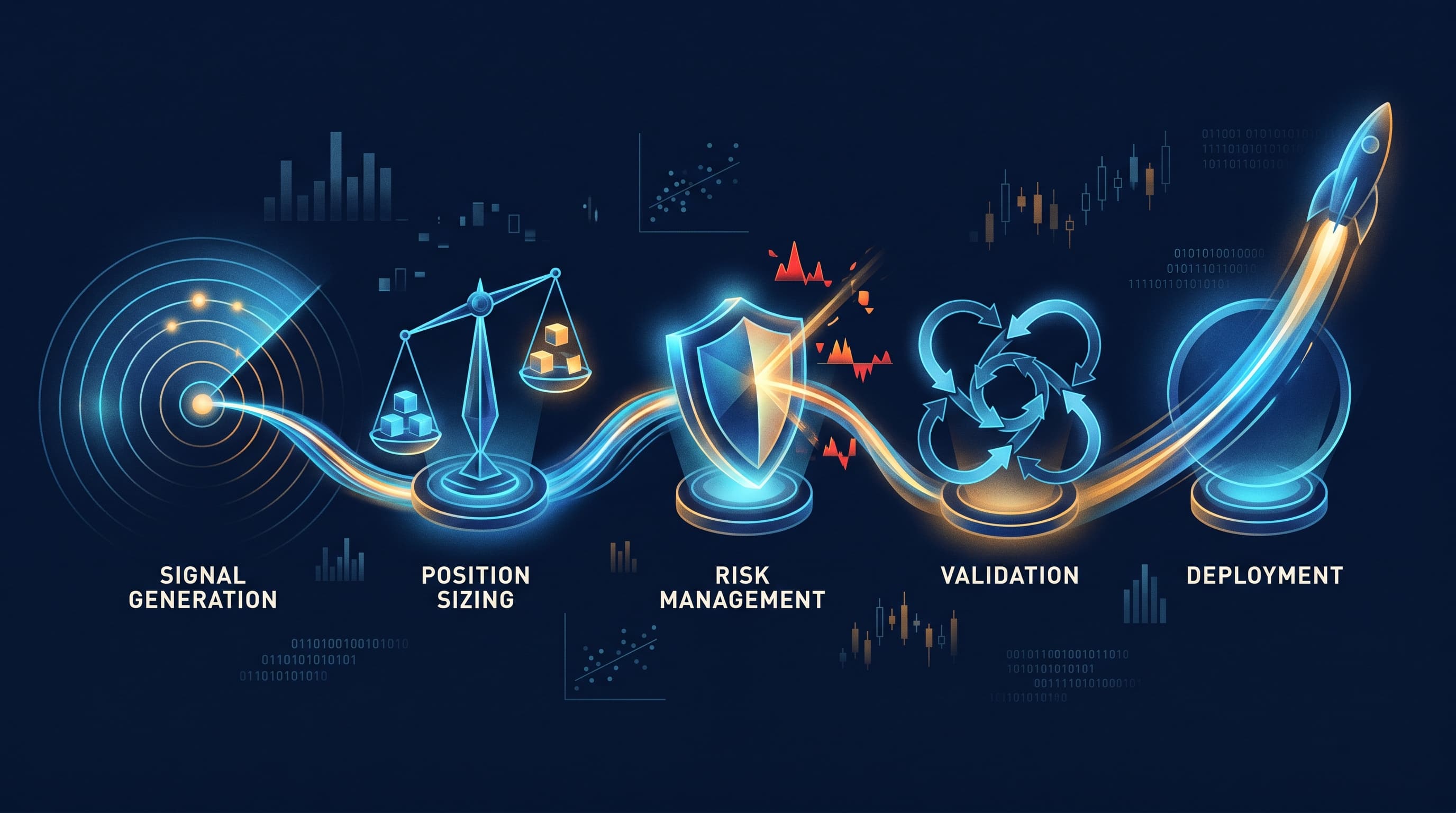
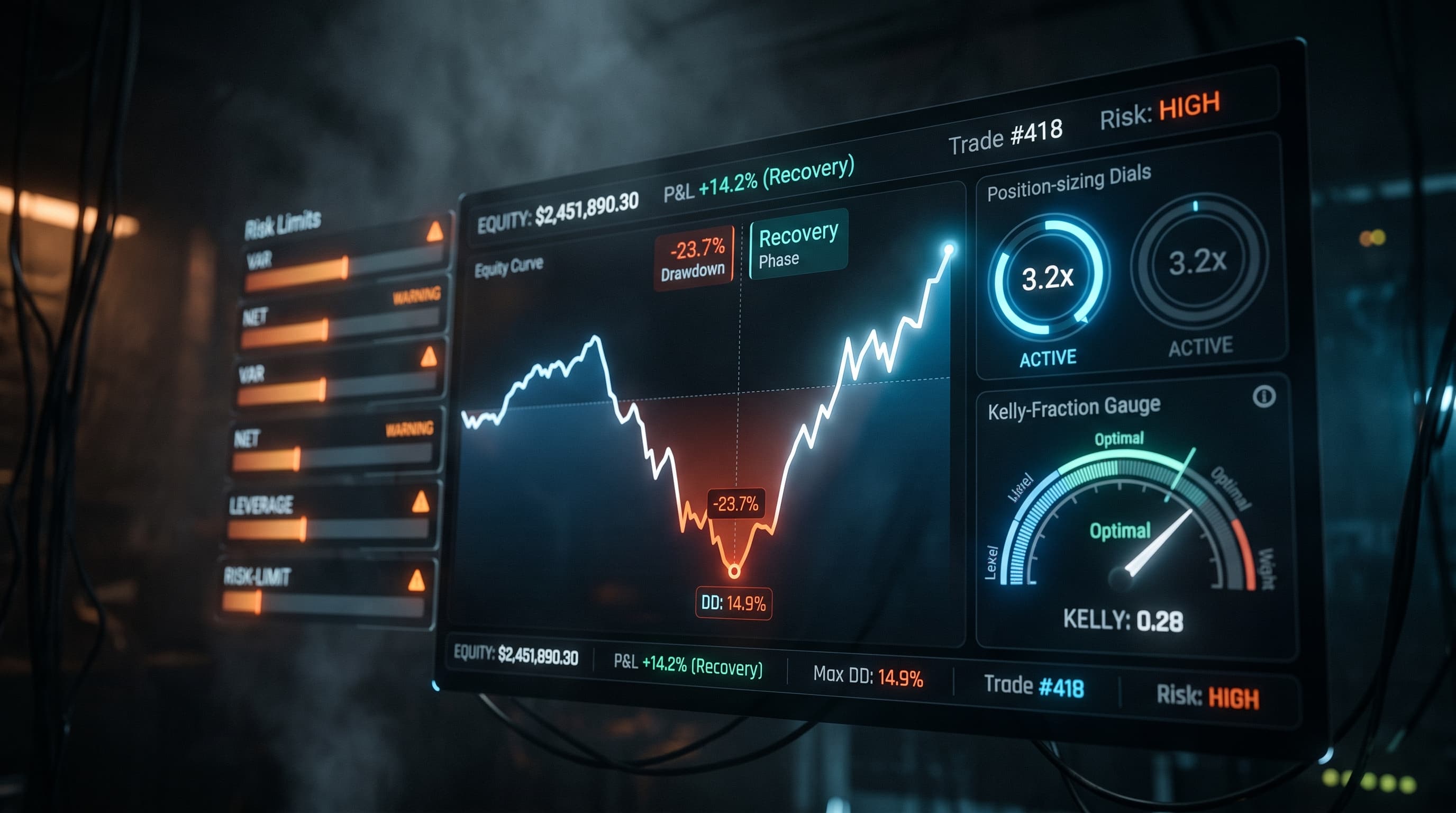
Risk management. Even the best strategy needs guardrails. Position limits, maximum exposure per contract, stop-loss conditions. These should be defined upfront, not bolted on after a bad day.
The Competitive Landscape Is Still Early
Despite the clear advantages of AI agents in prediction markets, we're still in the early innings. Most prediction market volume is still driven by manual traders placing orders through web interfaces.
That's a window of opportunity. The traders who deploy automated strategies now — while the competition is still largely manual — will build edge that compounds over time as they refine their models and accumulate data.
The 2024 election showed what's possible. The next wave won't just be event-driven speculation — it'll be systematic, AI-powered trading across the full spectrum of prediction market contracts.
Start Building Your Edge
The tools to build AI-powered prediction market strategies are available right now. Turbine Studio lets you describe a strategy in plain English — "buy YES on any Kalshi market where the price drops below 20 cents" — and deploys it to run 24/7 on Kalshi.
No coding. No API integration. No infrastructure management. Just your trading thesis, running autonomously.
Get started with Turbine Studio →
This post is for informational purposes only and does not constitute financial advice. Trading prediction markets involves risk of loss. Past performance of any strategy does not guarantee future results.