Best Prediction Market Trading Bots: 8 Platforms Compared
 Ryan Bajollari
Compare 8 prediction market trading bots and AI platforms for Kalshi and Polymarket, including execution, backtesting, risk controls, and venue support.

Polymarket's own official AI agent framework is dead. GitHub archived it on May 11, 2026, after 3,700 stars and 830 forks (Polymarket/agents, 2026). Meanwhile, 62% of US retail investors now say they use AI to inform trading decisions (Investing.com survey, Apr 2026). Demand for AI-driven execution is rising exactly as the market's most visible "official" tool stopped shipping.
That gap is what this ranking is about.
Key Takeaways
- We rank 8 AI/algo tools for Kalshi and Polymarket on execution capability, not general features — natural-language strategy building, backtest-to-live automation, latency, and reliability
- Turbine Studio ranks #1 for combining a chat-based strategy builder with one-click deploy to live Kalshi and Polymarket accounts
- Polymarket's own official "Agents" repo was archived in May 2026 — it's a real but discontinued framework, not an active product
- QuantConnect has zero native Kalshi or Polymarket support as of 2026, despite being the DIY quant gold standard for other assets
- 3.7% of Polymarket users generate 37.44% of trading volume (Hubble Research via KuCoin, Jan 2026), and 14 of the top 20 most profitable wallets are bots (Finance Magnates, 2026)
The Ranking: Execution Capability, Not Feature Lists
Most "best trading bot" roundups score price, uptime, and community size. That misses the question that actually matters in 2026: can this tool turn a plain-English idea into a live, working trade — and keep working after you stop watching it?
We scored each platform on five criteria:
- AI capability — does it generate or interpret strategy logic, or just execute rules you write by hand?
- Signal-to-execution automation — how much distance is there between "I have an idea" and "it's live"?
- Execution reliability — does it stay working when an exchange changes its API, and who is responsible for that maintenance?
- Latency — where does the tool run, and how fast can it act on a signal?
- No-code accessibility — can a non-developer actually use it?
The Ranking at a Glance
| Rank | Platform | Best for | Biggest limitation |
|---|---|---|---|
| 1 | Turbine Studio | Traders who want a no-code path from idea to live bot | Newer product, smaller community than legacy tools |
| 2 | Custom LLM + function-calling stacks | Developers who want maximum control | No no-code path; you own every failure mode |
| 3 | Simmer | Developers who want an agent SDK, not a full app | API/SDK-first, not a chat interface |
| 4 | Olas Polystrat | Traders curious about fully autonomous agents | Polymarket only; no Kalshi; thin public track record |
| 5 | OctoBot (Prediction-Market module) | Self-hosters who want open-source control | Rule-based automation, not LLM-driven strategy generation |
| 6 | PredictEngine | Cheapest no-code Polymarket-only start | Custodial wallet model; no visible backtesting depth |
| 7 | Polymarket Agents (official) | Reading the reference architecture | Archived and unmaintained since May 2026 |
| 8 | QuantConnect-style DIY | Traditional/crypto quant strategies | Zero native Kalshi or Polymarket support |
#1: Turbine Studio — Chat to Live Bot, One Deploy Step
Turbine Studio's builder works like this: describe a strategy in plain English — "fade Kalshi weather markets when the forecast is more than 8 points off the market price." The system turns that into an inspectable strategy you can read before anything trades. It recognizes common shapes like mean reversion and spread capture (see our breakdown of five strategy archetypes), plus fully custom logic.
The part that separates it from most "AI trading" tools: the backtest and the live deployment are the same pipeline. You test a strategy against historical data, and deploying the version that passed is a single step — not a rewrite into a different execution system. Turbine's own marketing describes this as one-click deployment, and the product backs it with cloud execution infrastructure (Locus) rather than requiring you to run your own server.
Studio trades live on Kalshi today, plus Polymarket in the US and internationally, with eligibility handled per account. When Kalshi retired its original order-placement API in mid-2026, Turbine shipped a migration to the newer v2 endpoint in the same cycle — the kind of maintenance a DIY bot builder has to absorb alone, discussed more in our Kalshi vs. Polymarket automation comparison.
No-code accessibility is real but not unlimited: the free trial caps out at a fixed number of lifetime deploys, paid plans work on a weekly deploy-credit allowance instead of unlimited deploys, and cross-platform arbitrage is gated to Pro. That's a usage ceiling worth knowing before you build around it, not a hidden catch — see Turbine's pricing for current limits.
Score: 4.6/5 — highest combined AI capability and no-code accessibility of any tool in this ranking.
#2: Custom LLM + Function-Calling Stacks
This isn't a single product — it's a pattern. Developers wire Claude or GPT tool-use into Kalshi's REST/WebSocket APIs and Polymarket's py-clob-client, letting the model decide when to call a "place order" function based on live market data.
The ceiling here is the highest of anything in this list. You control every prompt, every data source, every execution rule. That's also the problem: there's no floor. Reliability, latency, and error handling are entirely on you to build. A working cross-platform bot typically takes 2-4 weeks for an experienced Python or Rust developer, per patterns documented in our cross-platform automation comparison, plus ongoing maintenance every time an exchange changes its API — the same v2 migration Turbine absorbed for its users is a DIY builder's problem to catch and fix solo.
Custom stacks score high on AI capability and signal-to-execution automation for teams that can build and maintain them, but zero on no-code accessibility. They're the right call for developers who need behavior no packaged tool offers yet.
Score: 4.0/5 — highest ceiling, no floor.
#3: Simmer — An Agent SDK for Both Venues
Simmer (simmer.markets) is a real, active SDK built specifically for autonomous agent trading across both Polymarket and Kalshi, with self-custody wallets and configurable risk rails — defaults around $100 per trade, $500 per day, and 50 trades per day. It's closer to what a lot of "Polymarket AI bot" searches are actually looking for than the products that show up first.
It's SDK-first, not a chat interface — you're still writing code to wire an agent's decisions to Simmer's execution layer. That puts it behind Turbine Studio on no-code accessibility, but ahead of raw custom stacks on signal-to-execution automation, since the order placement and risk-limit plumbing is already built for you.
Score: 3.6/5 — the best middle ground for developers who don't want to write exchange integration code from scratch.
#4: Olas Polystrat — A Fully Autonomous Agent, Polymarket Only
Polystrat, built on Olas's Pearl agent framework, launched in February 2026 as an autonomous, NLP-driven trading agent for Polymarket (Olas official blog, Feb 2026). It's a legitimate, fully agentic product — not a script you supervise, but one designed to run and decide on its own.
Two caveats worth flagging. First, it's Polymarket-only; there's no Kalshi support. Second, the eye-catching performance numbers attached to its launch (large trade counts, triple-digit single-trade returns) come from secondary press coverage, not from Olas's own blog, which publishes no performance data. Treat those figures as launch-week press amplification, not audited results, until Olas reports its own numbers.
Score: 3.2/5 — genuinely autonomous, but single-venue and unproven at scale.
#5: OctoBot (Prediction-Market Module) — Open Source, Not LLM-Driven
OctoBot-Prediction-Market is a real, GPL-3.0-licensed module built by Drakkar Software on top of the core OctoBot crypto bot framework, extending it to Polymarket with copy-trading and arbitrage-detection features (Kalshi support is explicitly listed as planned, not shipped) (Drakkar-Software/OctoBot-Prediction-Market, GitHub). It runs self-hosted via Docker, which means your keys stay on your own infrastructure instead of a hosted server.
Where it loses points on this specific ranking: it's rule- and indicator-based automation, not a natural-language strategy generator. If you already know exactly what conditions should trigger a trade, OctoBot gives you real control. If you're hoping to describe a strategy in English and have it generate the logic, it isn't built for that.
Score: 2.6/5 — solid open-source automation, thin on the "AI" half of AI/algo execution.
#6: PredictEngine — Cheapest No-Code Start, Custodial Trade-Off
PredictEngine is a real, currently operating no-code bot builder for Polymarket, with four tiers from a $0 free plan up to $99/month. Self-reported "live activity" numbers on its homepage — roughly $150K in total volume, 1,000+ bots created, and 105K+ trades — is real traction for an early product, but it's small and unaudited.
The bigger issue for this ranking: PredictEngine's own terms describe private keys generated server-side and encrypted at rest by default — users can export keys at any time for full independent control, but that's an opt-in step, not the default state. It's also Polymarket-only, with no public backtesting depth to speak of. For traders who just want the cheapest possible hosted start and are comfortable with that default trust model, it's a real option — see our security-focused platform comparison for more on the custody question specifically.
Score: 2.2/5 — accessible, but the "AI" in its execution is thin and the trust model is a genuine trade-off.
#7: Polymarket Agents — Real, Official, and Discontinued
Here's the fact most comparisons miss entirely: Polymarket published its own official open-source agent framework — MIT-licensed, 3,700 GitHub stars, 830 forks — and then archived it on May 11, 2026 (Polymarket/agents). It's now read-only. No new commits, no maintenance, no support.
[ORIGINAL DATA] The archive notice itself points to what replaced it: community successors built on Claude's tool-use SDK and custom LangGraph stacks — in other words, the exact "custom LLM + function-calling" pattern ranked #2 above. Polymarket's own team effectively confirmed that a packaged agent framework wasn't worth maintaining once developers could build the same thing directly on top of general-purpose model tool-use.
If you're evaluating this because it shows up first in search results, know that you're looking at a reference architecture from 2025, not a live product in 2026.
Score: 1.4/5 — real and instructive to read, unusable as an active tool.
#8: QuantConnect-Style DIY Quant Platforms — Not Built for This (Yet)
QuantConnect is the closest thing to a gold standard for open-source, backtest-to-live quant infrastructure — its LEAN engine covers US equities, equity and index options, futures, forex, crypto, crypto futures, CFDs, and India equity with institutional-grade backtesting. Checking its official asset-class documentation directly, there is currently no native Kalshi or Polymarket integration listed anywhere (QuantConnect docs, 2026).
That doesn't mean the model is useless here — the backtest-then-deploy philosophy QuantConnect popularized is exactly what Turbine Studio and Simmer are applying to prediction markets. It means QuantConnect itself isn't a plug-and-play option for Kalshi or Polymarket without you building the exchange connector from scratch, which defeats the point of using a packaged DIY platform in the first place.
Score: 0.9/5 — the philosophy is right, the product doesn't reach this market.
Why Execution Reliability Is the Real Differentiator in 2026
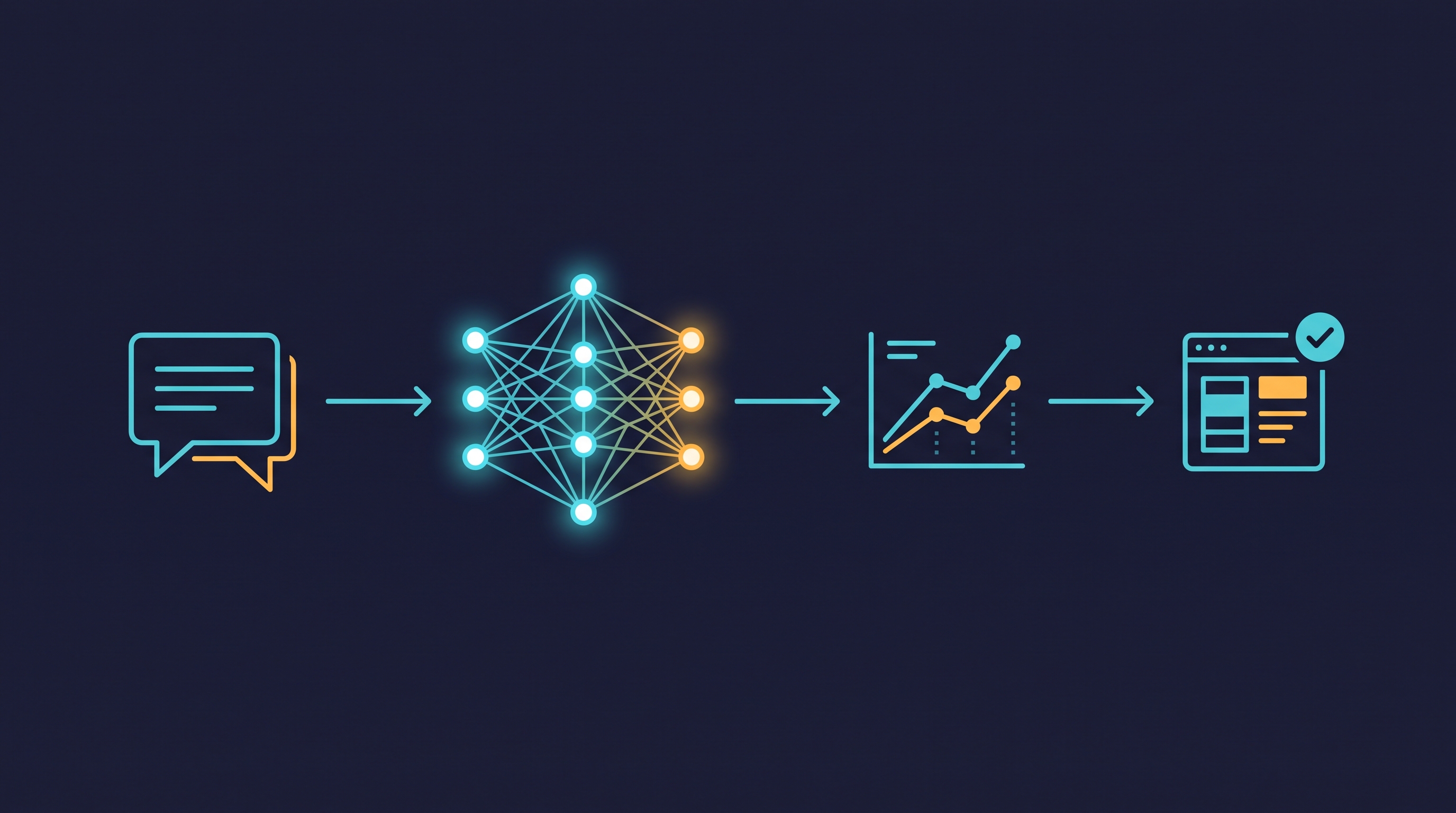
Bots aren't a niche corner of these markets anymore. On Polymarket, just 3.7% of users generate 37.44% of total trading volume (Hubble Research via KuCoin, Jan 2026), and 14 of the top 20 most profitable wallets are bots, while human wallets are profitable only about 7-8% of the time (Finance Magnates, 2026).
Regulation Is Part of the Reliability Question
Kalshi operates as a CFTC-regulated Designated Contract Market (Kalshi Help Center), but sports-specific contracts face active bans or litigation in several states as of mid-2026. Nevada has a court-ordered injunction; Michigan issued a temporary shutdown order; Massachusetts courts blocked sports contracts outright; Ohio fined Kalshi $5 million over tax and licensing disputes; and Arizona's criminal charges were blocked on appeal (CBS Sports, 2026).
The CFTC has also brought enforcement actions tied to market misconduct. One case cost a candidate trading their own race a $2,246.36 penalty and a five-year exchange ban. A separate insider-trading case cost $20,397.58 and a two-year ban (CFTC press release, Feb 25, 2026). None of this is about AI specifically, but it's the backdrop every execution platform on this list operates inside.
If you're less interested in picking a tool and more interested in surviving against the bots already dominating these venues, see our guide on competing with AI agents in prediction markets.
FAQ
Is there an AI trading platform built specifically for Kalshi and Polymarket?
Yes. Turbine Studio is purpose-built for both venues, combining a natural-language strategy builder with a single-step path from backtest to live deployment. Most alternatives on this list support only one platform or require custom development.
Is Polymarket's official "Agents" framework still usable?
It still exists on GitHub, but Polymarket archived the repository on May 11, 2026, meaning no further updates or support (Polymarket/agents). Treat it as a reference, not a live tool.
Can I use QuantConnect for Kalshi or Polymarket?
Not natively. QuantConnect's documented asset classes cover equities, options, futures, forex, and crypto, with no listed Kalshi or Polymarket integration as of 2026 (QuantConnect docs). You'd need to build the exchange connector yourself.
Do I need to know how to code to use an AI trading platform for prediction markets?
No, if you choose a no-code platform like Turbine Studio or PredictEngine. Developer-first options like custom LLM stacks, Simmer, and OctoBot require programming to set up and maintain.
How much of prediction market trading volume actually comes from bots?
On Polymarket, 3.7% of users generate 37.44% of total trading volume (Hubble Research via KuCoin, Jan 2026), and bots hold 14 of the top 20 most profitable wallet positions (Finance Magnates, 2026).
The Bottom Line
Rank these tools on features and the list looks crowded. Rank them on whether a plain-English idea can become a reliable live trade, and it narrows fast: one option (Turbine Studio) built the whole pipeline for that; one pattern (custom LLM stacks) gives you full control at full cost; and the "official" option investors keep finding first has been dead since May.
That's the environment these tools operate in — pick the one that matches how much of the plumbing you actually want to own.
Build and backtest a strategy in Turbine Studio
This post is for informational purposes only and does not constitute financial, legal, or investment advice. Prediction market trading involves risk of loss. Platform capabilities, fees, and regulatory status change frequently — verify current terms directly with each provider before making decisions. Performance figures attributed to third-party press coverage have not been independently audited.