How Prediction Markets Actually Resolve: Kalshi vs Polymarket (2026)
 Ryan Bajollari
A $160M Polymarket market flipped from YES to NO after oracle disputes. How Kalshi and Polymarket settle contracts, and how to price resolution risk.
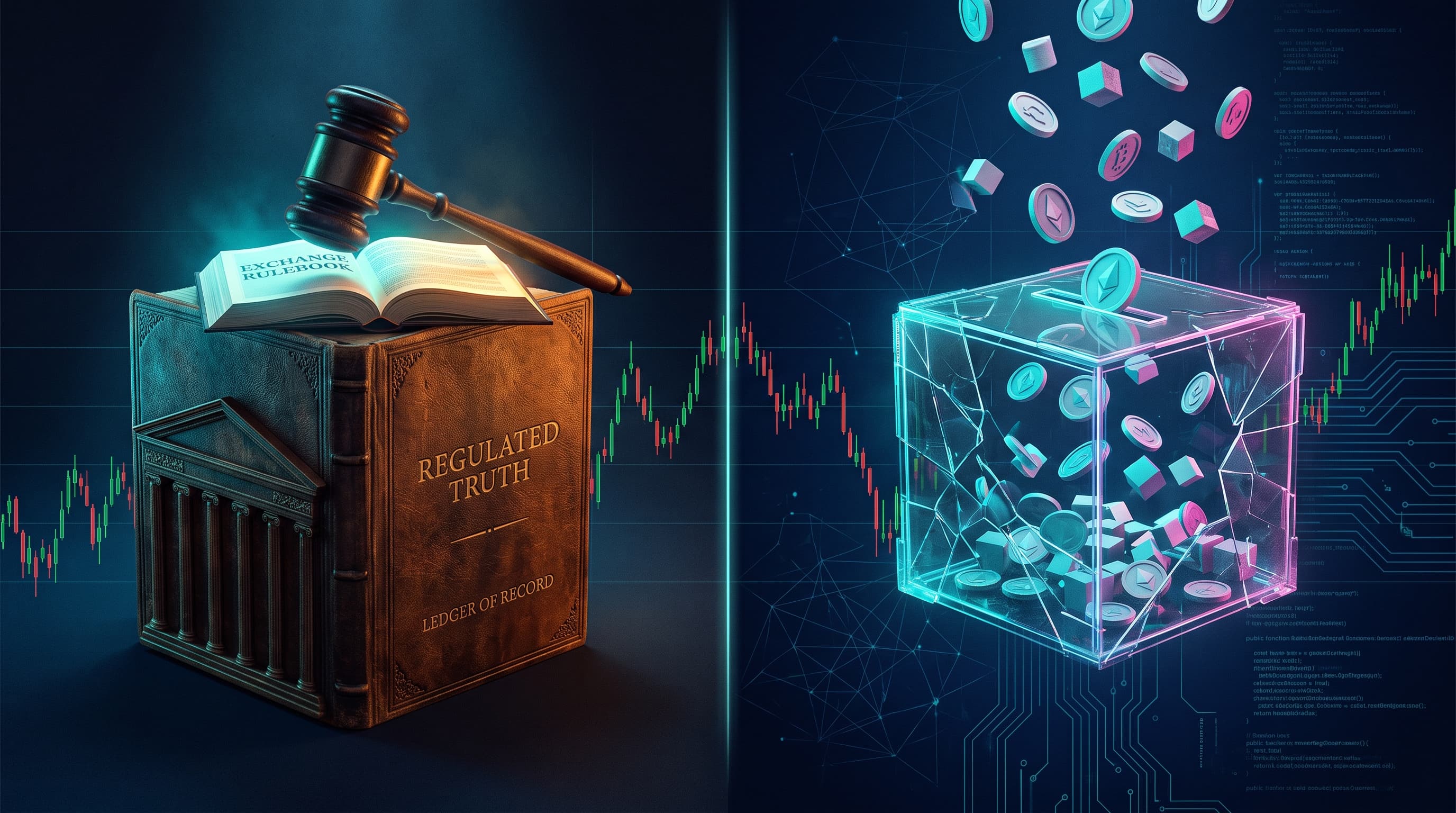
In July 2025, a Polymarket market asked whether Zelenskyy would wear a suit. Menswear experts — and the designer who made the outfit — said he did. The market initially resolved YES, then flipped to NO after nine days of oracle disputes (The Defiant, 2025), with roughly $160 million riding on the controversy (Forbes, 2025).
That's resolution risk. It's the part of prediction market trading almost nobody prices, and in 2026 the stakes are growing fast. A Wall Street Journal investigation found that nearly 20% of Polymarket's disputed-market outcomes involved oracle voters with financial stakes in the very markets they were judging (WSJ, via Crypto Briefing, 2026).
Key Takeaways
- Kalshi settles by exchange determination: a named Source Agency, a rulebook, and CFTC oversight.
- Polymarket settles via UMA's optimistic oracle: a $750 bond, a 2-hour challenge window, and token-holder votes on disputes.
- Disputed markets have flipped after initial resolution — the ~$160M Zelenskyy suit market reversed from YES to NO.
- Resolution risk is a real, hedgeable cost. Read the resolution criteria before you trade, and haircut your edge in ambiguous markets.
This post covers the settlement layer specifically. For the legal landscape, see our regulation guide; if you're new to event contracts entirely, start with the beginner's guide.
How Kalshi Resolves Contracts: Exchange Determination
Kalshi is a CFTC-designated contract market, and every contract it lists specifies a "Source Agency" in its rules — the publisher of the number that settles the trade (Kalshi Rulebook, CFTC filing, 2025).
For a CPI contract, that's the Bureau of Labor Statistics. For weather, the National Weather Service. For corporate events, it might be SEC filings or named publications. When the Source Agency publishes the Expiration Value, the contract settles. YES holders get $1, NO holders get $0, and funds land in your account.
The exchange itself is the final arbiter. There's no community vote and no bond mechanism. If a determination looks wrong, Kalshi has a Market Outcome Review Process, and behind that sits CFTC oversight of the whole rulebook.
That doesn't make Kalshi resolution risk-free — it makes the risk discretionary rather than adversarial. More on that below.
How Polymarket Resolves: UMA's Optimistic Oracle
Polymarket is non-custodial and on-chain, so it can't just "decide" outcomes. It outsources truth to UMA's optimistic oracle (Polymarket docs, 2026). The lifecycle:
- Proposal. Once the outcome is knowable, a proposer posts the answer with a bond (typically $750).
- Challenge window. Anyone can dispute within 2 hours by posting a matching bond. No dispute → the market resolves, usually about 2 hours after proposal.
- Dispute. A first dispute sends the question back for a fresh proposal. A second dispute escalates to UMA's Data Verification Mechanism (DVM).
- DVM vote. UMA token holders vote on the outcome over roughly 48 hours — a fully disputed market takes 4–6 days total to pay out. Majority wins; correct voters earn rewards, wrong-side bonds are slashed.
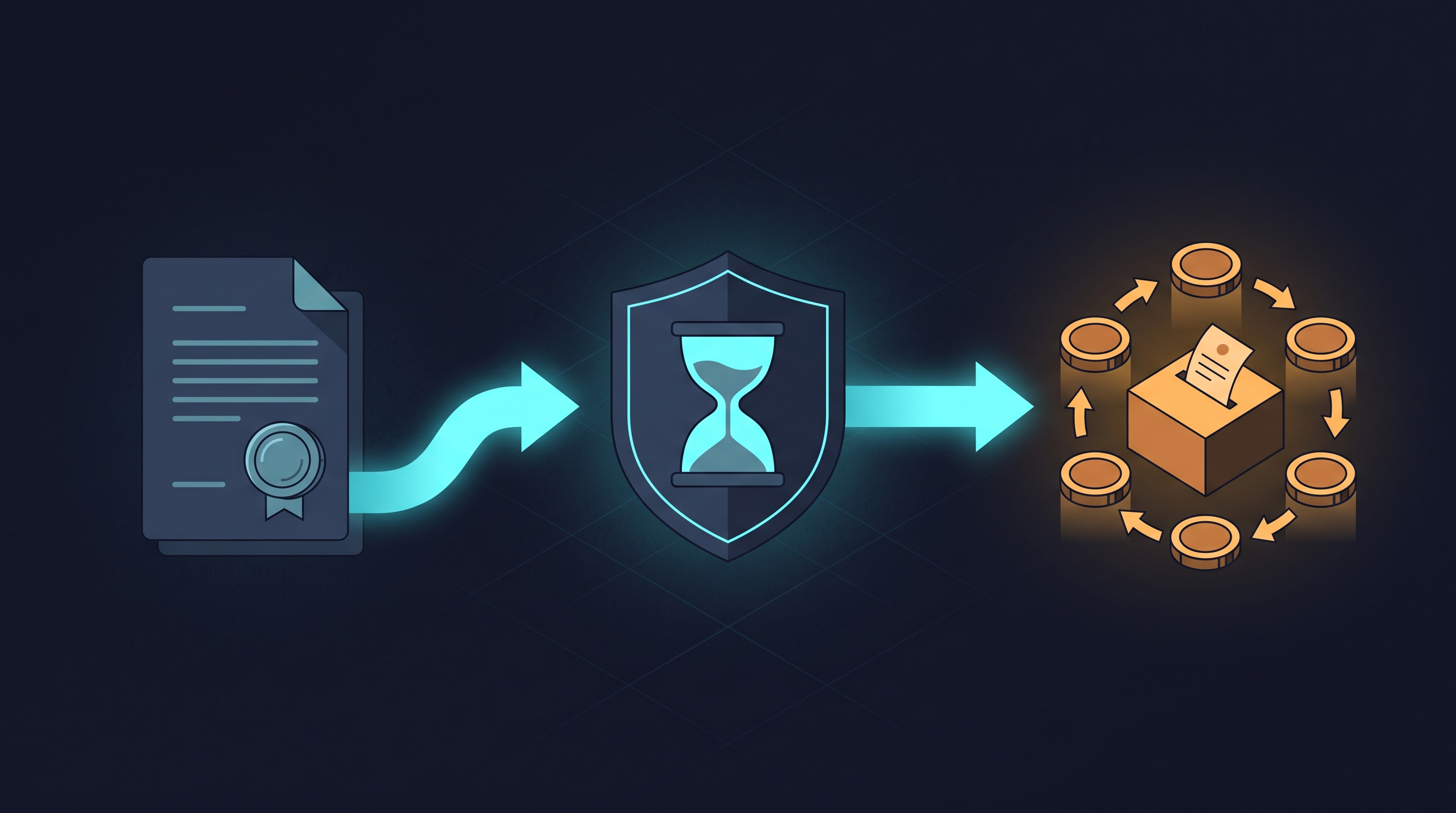
"Optimistic" means the system assumes proposals are honest unless someone pays to disagree. It's cheap and fast for the 99% of markets with obvious outcomes. The problem is the other 1%.
When Disputes Go Wrong: Three Case Studies
Every stat in this section is why "read the resolution criteria" isn't a throwaway line.
Ukraine mineral deal, March 2025. A $7M market asked whether the US and Ukraine would sign a minerals agreement by a deadline. No deal was signed. It resolved YES anyway — swinging from a 9% YES price to 100% — after a large UMA token holder swung the vote. Polymarket called the situation "unprecedented" but said it "wasn't a market failure" and issued no refunds (CoinDesk, 2025; The Block, 2025).
The Zelenskyy suit, July 2025. Roughly $160M in bets rode on whether Zelenskyy would wear a suit before July (Forbes, 2025). Menswear experts and the outfit's own designer called it a suit. YES holders watched the outcome get proposed in their favor — and then reversed against them after a week and a half of dispute rounds (The Defiant, 2025).
Strategy's bitcoin sale, June 2026. A $79M Polymarket contract asked whether Strategy (MSTR) would sell bitcoin in May. The sale happened May 26–31 — but the 8-K disclosing it wasn't filed until June 1 (CoinDesk, 2026). The dispute resolved the May market NO — the event "counted" when disclosed, not when it occurred (The Block, 2026). Galaxy Research put the exposure across related markets as high as $375M (CryptoTimes, 2026).
The Whale Problem — and Polymarket's Fix
Why do token votes go sideways? Concentration. A May 2026 Wall Street Journal investigation found that the ten largest UMA token holders control over 50% of voting power in most Polymarket disputes (WSJ, via Crypto Briefing, 2026). Nearly 20% of disputed outcomes involved voters with financial stakes in the markets they were judging, and roughly 60% of active voters were linked to Polymarket trading accounts (WSJ, via Crypto Briefing, 2026).
The incentive design cuts both ways. Voters are rewarded for voting with the majority, not for being right — so once a whale signals a side, smaller voters herd toward it. That's how a market can resolve against the AP, BBC, and Reuters simultaneously.
Polymarket has responded. UMIP-189, passed in August 2025, moved its markets to a Managed Optimistic Oracle (MOOV2): only whitelisted addresses can propose outcomes — an initial list of 37 experienced proposers, since expanded — though anyone can still dispute (The Block, 2025). That killed drive-by bad proposals. It did not change who decides escalated disputes: UMA token holders still do. Most explainers you'll find still describe the old open-proposal system — they're out of date.
The bigger open question: Polymarket bought QCEX, a CFTC-licensed exchange and clearinghouse, for $112M in July 2025 to re-enter the US (PRNewswire, 2025). No CFTC-regulated venue has ever settled contracts by token vote; expect the US product's settlement rules to look more Kalshi-like over time.
Kalshi's Failure Mode Is Different, Not Absent
Kalshi can't be whale-voted. But exchange discretion has its own edge cases, and one event shows the contrast perfectly.
When a market on a Super Bowl halftime performance was deemed ambiguous, Kalshi reportedly invoked its rulebook provision for ambiguous outcomes and settled at the last traded price — YES holders got $0.26, NO holders $0.74. Polymarket resolved the identical question YES at full value (Prediction News, 2026). Same event, two settlement architectures, two different payouts.
Similarly, Kalshi's 2025 Oscars viewership market resolved NO on an initial 18M viewer figure; the number was later revised to 19.7M — above the 19.5M threshold — but the settlement stood (Prediction News, 2025). Kalshi settles on what the Source Agency prints first, not on revisions.
The pattern: Polymarket's risk is adversarial (someone with tokens and a position can fight the outcome). Kalshi's risk is interpretive (the exchange reads its own rulebook, and first-print data is final). Both are survivable. Both must be priced.
How to Price Resolution Risk Into Your Trades
This is the section most guides skip. Disputes and ambiguity aren't just annoying — they're a quantifiable haircut on expected value. Practical rules:
1. Read the resolution criteria before the market, not after. The full description — source, deadline, timezone, and what counts as the event occurring vs being reported — is the contract. The Strategy dispute turned entirely on occurrence-vs-disclosure. If the criteria don't answer that question for your market, you're trading a different bet than you think.
2. Haircut "sure things" in subjective markets. A 97c YES on a subjective question (did X "wear a suit," is Y "officially announced") isn't a 3% return waiting to happen. The Zelenskyy market went from initially resolved YES to paying out NO. As a rough rule, treat subjectively-worded Polymarket markets as carrying a 1–3% tail of adverse resolution, and size accordingly. Objectively-sourced markets (a BLS print, a game score) carry close to none.
3. Price the delay, not just the flip. A fully disputed market takes 4–6 days to pay out instead of two hours (Polymarket docs, 2026). If your strategy recycles capital across short-dated markets, a disputed resolution freezes that capital and drags your annualized return even when you win.
4. Prefer named-source markets for automation. Bots can't argue with an oracle. If you're running automated strategies, favor contracts where settlement is a number published by a named agency. This is a real advantage of Kalshi's structure for systematic trading — every contract names its Source Agency up front. Our Kalshi vs Polymarket automation comparison goes deeper on platform differences.
5. Beware first-print risk on data markets. On Kalshi, the initial published figure settles the contract even if it's later revised. If a data series is routinely revised (viewership numbers, preliminary economic prints), that's part of your bet.
When we backtest strategies at Turbine, ambiguously-worded markets are exactly the ones we exclude from live deployment first. A strategy that looks great on paper can give back a quarter's edge in one contested resolution — the same way overfit backtests lie about live performance.
Why This Matters More in 2026
Resolution infrastructure is being stress-tested at a scale that didn't exist two years ago. Combined monthly trading volume on Kalshi and Polymarket grew from under $5 billion in September 2025 to about $24 billion in April 2026 (Pew Research Center, 2026) — nearly a 5x jump in eight months.
More volume means more markets, more edge cases, and more money riding on each ambiguous phrase. Rising dispute activity isn't a bug spike — it's the natural result of listing tens of thousands of markets written in natural language. Settlement is the layer where prediction markets either earn institutional trust or don't.
Trade the Markets Where Resolution Is Boring
The best resolution event is the one you never think about: the number prints, the contract settles, the money moves. You get that by choosing well-sourced markets and encoding your rules — including which markets to avoid — into a systematic process.
That's what Turbine Studio is built for. Describe your strategy in plain English, backtest it against historical Kalshi data, and deploy it as a bot that trades only the contract types you've vetted. No oracle drama, no discretionary judgment calls at 2 a.m.
FAQ
How does Kalshi decide who wins a contract?
Each Kalshi contract names a Source Agency — like the BLS, NWS, or SEC filings — whose published value settles the market (Kalshi Rulebook, 2025). The exchange makes the final determination under CFTC oversight, with a review process for contested outcomes.
What is UMA's optimistic oracle on Polymarket?
It's Polymarket's settlement system. A whitelisted proposer posts the outcome with a bond (typically $750); anyone can dispute within 2 hours. Two disputes trigger a UMA token-holder vote, and a fully disputed market takes 4–6 days to resolve (Polymarket docs, 2026). Undisputed markets resolve in about two hours.
Who decides disputed Polymarket outcomes?
UMA token holders. The WSJ found the ten largest UMA holders control over 50% of voting power in most disputes, and about 60% of active voters are linked to Polymarket trading accounts (WSJ, via Crypto Briefing, 2026). Concentration is the system's biggest criticism.
Can a prediction market resolve incorrectly?
Yes. Polymarket's $7M Ukraine minerals market resolved YES despite no deal being signed, after a large UMA holder swung the vote (CoinDesk, 2025). There were no refunds. Kalshi's discretionary calls have also settled markets in ways traders contested, like its Oscars viewership market.
Which platform has safer settlement for automated trading?
For bots, Kalshi's named-source model is easier to reason about: settlement is a published number, not a vote. Polymarket's MOOV2 proposer whitelist improved proposal quality, but escalated disputes still go to token holders. Either way, restrict automation to objectively-sourced contracts.
Conclusion
- Kalshi resolves by exchange determination against a named Source Agency; its risk is interpretive (rulebook readings, first-print data).
- Polymarket resolves via UMA's optimistic oracle; its risk is adversarial (bonds, disputes, and token votes that whales can dominate).
- High-profile disputes — the $7M Ukraine minerals market, the ~$160M Zelenskyy suit market, and the $79M+ Strategy bitcoin-sale market — all turned on wording, not facts.
- Read resolution criteria first, haircut subjective markets, price dispute delays, and automate only on well-sourced contracts.
This post is for informational purposes only and does not constitute financial or legal advice. Prediction market trading involves risk, including resolution risk described above. Always do your own research.