How to Trade Prediction Markets With an AI Agent Using MCP
 Ryan Bajollari
Learn how to trade prediction markets with an AI agent using MCP for research, backtesting, risk controls, deployment, and monitoring.
To trade prediction markets with an AI agent, connect an MCP-compatible AI client to a trading workspace, give the agent a precise market thesis and risk budget, have it research and backtest the idea, then require a human-approved preview before any live deployment. The agent should keep monitoring positions after launch, but it should never be allowed to invent risk limits, handle raw credentials in chat, or treat a profitable backtest as proof of future returns.
That is the short answer. The bigger story is that AI trading has crossed an interface threshold.
Meta's new Muse agent can work in a persistent virtual machine, use a browser and connected apps, continue after the user closes the app, and pause for approval before sensitive actions. Meta describes Muse as an agent that does work rather than merely answering questions (Meta, September 2026). For prediction-market traders, that shift from answering to acting is more important than another incremental jump in benchmark scores.
Muse does not currently document a direct Turbine MCP connection. But it makes the new computing model obvious: you state a goal, an agent assembles the steps and tools, and a separate permission layer controls consequential actions. With Turbine MCP, that same model is now available for prediction-market research, strategy development, backtesting, deployment, and monitoring in compatible AI clients.
Key takeaways
- An AI agent is most useful as a research, testing, execution, and monitoring loop—not as an oracle that always predicts the right outcome.
- MCP gives an AI client a standard way to use external data, tools, and workflows instead of relying on copied-and-pasted context.
- Turbine MCP can inspect account-scoped strategies, research, backtests, deployments, logs, fills, PnL, and journal data.
- Consequential changes use a preview-and-confirm flow. The agent proposes; the trader approves.
- Meta Muse is the clearest mainstream signal yet that persistent, tool-using, approval-gated agents will become a normal interface for complex work.
- Trading remains risky. Backtest first, paper trade second, and start live with exposure you can afford to lose.
Why Meta Muse Is the Biggest Advancement in Prediction Market Trading
Muse was not built as a prediction-market terminal. Calling it a trading product would be inaccurate. Its importance is architectural.
Previous AI trading workflows usually stopped at one of three places. A chatbot could explain a market but could not inspect your account. A coding assistant could write a bot but could not operate it safely. A traditional trading bot could execute rules but could not reason with you when conditions changed.
Muse brings the missing pieces into one consumer-facing pattern:
- Persistent work: the agent keeps working after the chat window closes.
- Tool use: it can use a browser, apps, code, and connectors to complete multi-step tasks.
- Memory and context: it can retain the goal and relevant preferences across a longer project.
- Permission boundaries: a separate control system can stop, allow, or escalate actions.
- Human-readable interaction: the user delegates through conversation instead of learning every underlying API.
Meta says Muse runs inside a dedicated Secure VM and routes external actions through a separate Sentinel system. Sensitive actions can require explicit user approval, and the core agent does not see real passwords or payment credentials (Meta AI Research, September 2026). Meta also built Muse Spark around tool use and multi-agent orchestration rather than text generation alone (Meta AI, April 2026).
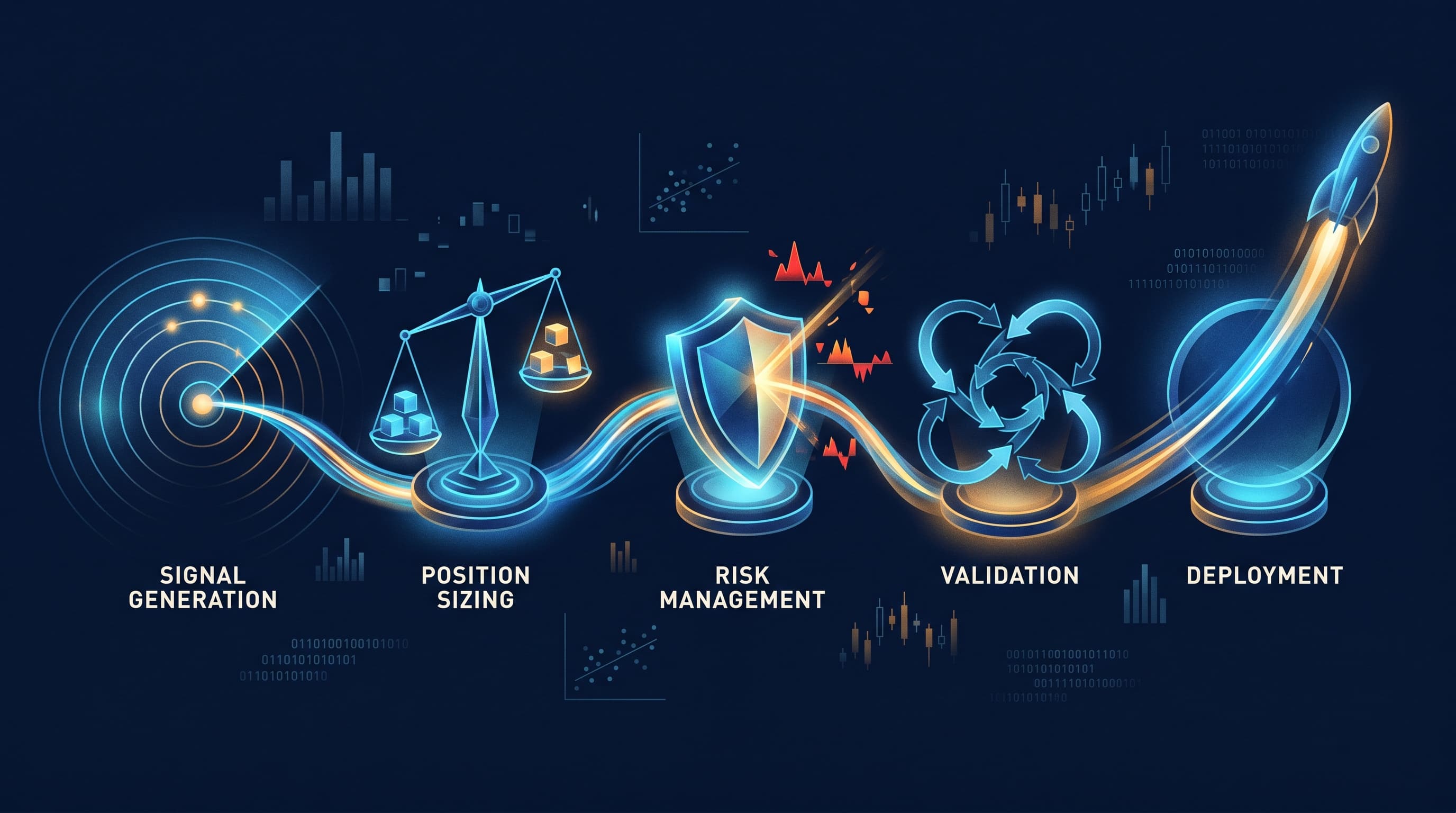
That pattern maps unusually well to prediction markets. Trading is not one prompt. It is a continuous chain:
find a market → read the rules → form a probability → compare it with price
→ define an entry → size the risk → backtest → deploy → monitor → revise
The largest advance is therefore not “Meta built a model that can pick winners.” Meta has made the persistent agent legible to ordinary users. MCP makes the same agent pattern portable across specialized systems. Together, those changes turn AI from a source of trading suggestions into an interface for a controlled trading workflow.
In our view, this is prediction-market trading's biggest interface advance since exchange APIs became widely accessible: the trader can work at the level of goals, evidence, and risk while the agent coordinates the machinery underneath.
AI Agent vs. Trading Bot vs. Chatbot
An AI agent, a rule-based bot, and a chatbot solve different problems.
| System | What it does well | Where it breaks |
|---|---|---|
| Chatbot | Explains markets, summarizes research, drafts ideas | Usually lacks live account context and cannot complete the workflow |
| Rule-based bot | Repeats known instructions quickly and consistently | Cannot interpret ambiguity or redesign the strategy when assumptions change |
| AI trading agent | Uses tools, reasons across steps, checks results, and coordinates actions | Can hallucinate, misread rules, overfit, or take unsafe action without hard controls |
A serious trading setup uses all three modes. The agent reasons about the task. Deterministic software calculates positions and enforces limits. The runner executes the approved rules without asking a language model to improvise on every tick.
That distinction matters. A language model should not decide, from scratch, whether to risk 2% or 20% of your account each time a headline appears. It should help you express and test a policy. The deployed strategy should then enforce that policy predictably.
For a deeper breakdown of the automation layer, see what an automated prediction-market trading bot actually does.
If you are deciding whether to automate or keep trading manually, start with the build-or-defend playbook for competing with AI agents.
What MCP Adds to an AI Prediction-Market Agent
MCP stands for Model Context Protocol. Its official documentation defines it as an open standard that connects AI applications to external data, tools, and workflows—the rough equivalent of a common port for AI systems (Model Context Protocol).
Without MCP, a trader often has to copy market data into a chat, describe the current strategy from memory, paste a backtest result, and manually repeat every requested change in a separate interface. Every handoff loses context and creates another chance for error.
With MCP, a compatible AI client can ask a specialized server what tools are available and call them in a structured way. The model does not have to invent an undocumented endpoint or scrape a dashboard. It can work through the product's supported interface.
Turbine MCP exposes the Studio workflow through one remote server:
https://api.turbinefi.com/api/v1/mcpAfter you connect, an AI agent can work with owner-scoped information from your Turbine account, including:
- strategies and Studio sessions;
- market research and completed reports;
- backtest jobs, progress, assumptions, and results;
- paper and live deployment status;
- runtime diagnostics, logs, trades, fills, PnL, and equity;
- trading-journal runs, events, contracts, and sampled account state;
- supported deployment, update, switch, stop, recovery, and cancellation actions.
The phrase owner-scoped is important. The connection operates within the authenticated account. It does not expose another user's strategies or runner data, and it does not bypass plan or usage limits.
How to Connect an AI Agent to Turbine MCP
You need a registered Turbine account and an AI client that supports remote Streamable HTTP MCP servers plus OAuth. Local clients can use a browser redirect; hosted clients can use device authorization.
- Open the MCP or integrations settings in your compatible AI client.
- Add
https://api.turbinefi.com/api/v1/mcpas a remote MCP server. - Follow the browser or device-code sign-in flow.
- Confirm that the displayed client name and origin are the ones you expect.
- Review the access request and approve the connection.
- Return to the AI client and ask it to list the Turbine tools it can use.
Turbine uses OAuth, so you do not create an API key and paste it into the conversation. The MCP authorization standard is designed so a client can make restricted requests on behalf of a resource owner using OAuth-based access tokens (MCP authorization specification).
Do not paste exchange API keys, private keys, seed phrases, passwords, or one-time codes into the agent chat. Venue credentials, deposits, withdrawals, and membership checkout stay in the guided turbinefi.com flow. The complete connection and troubleshooting instructions live in the Turbine MCP guide.
How to Trade Prediction Markets With an AI Agent, Step by Step
The safest workflow is deliberately slower than “find me a trade and place it.” It makes the agent earn the right to move from an idea toward capital.
Step 1: Give the Agent a Testable Thesis
Bad prompt:
Find me a winning prediction-market trade.Better prompt:
Research whether Kalshi hourly Bitcoin contracts underreact to a 15-minute
spot-price breakout. Do not deploy anything. Define the market family,
entry signal, exit rule, stale-data behavior, maximum exposure, and the
evidence that would make you reject the thesis.
The second prompt creates a falsifiable question. It names a venue, a market family, a candidate signal, required risk fields, and a rejection standard.
Ask the agent to restate the thesis before doing anything else. If its restatement changes “underreact to spot price” into “Bitcoin will rise,” stop. It has already lost the core idea.
Step 2: Make It Read the Contract Rules
Prediction markets settle against specific wording, data sources, deadlines, and edge cases. A good forecast on the wrong interpretation is still a bad trade.
Require the agent to identify:
- the exact event and market family;
- the settlement source;
- the close and resolution times;
- ambiguous wording or dispute risk;
- whether related contracts overlap;
- fees, spread, available depth, and order constraints.
The agent should quote or link the relevant rule source in its research output. If it cannot establish how the contract resolves, the correct decision is no trade.
Step 3: Separate the Forecast From the Market Price
An agent that sees a 62-cent Yes price and then “predicts” 63% has added almost nothing. Ask it to form an independent probability range from the underlying evidence before comparing that range with the order book.
Use a prompt like:
Estimate a probability range from the underlying evidence before reading the
current contract price. Then compare your range with the executable bid and
ask, not the last trade. Explain how fees and slippage change the minimum
edge required to act.
The output should distinguish three numbers:
- the agent's estimated probability range;
- the market's executable price;
- the break-even price after costs.
No positive gap means no trade. A tiny gap that disappears after fees is not an edge.
Step 4: Turn the Thesis Into Explicit Strategy Rules
Once the research is coherent, ask the agent to draft a strategy with no hidden discretion. At minimum, define:
- eligible markets;
- required data and freshness limits;
- entry conditions;
- limit-price behavior;
- exit conditions;
- maximum position per market;
- maximum total exposure;
- daily loss or drawdown limit;
- cooldown and duplicate-order behavior;
- what happens when data is stale or unavailable.
The strategy should be readable by a human. “Use AI sentiment to trade favorable setups” is not a strategy. “Enter only when the independent estimate exceeds the executable Yes ask by at least eight percentage points after modeled fees, with a maximum $25 stake and no new order when source data is more than 90 seconds old” is testable.
See how to write a prediction-market strategy specification for the full contract.
Step 5: Backtest the Exact Rules
Ask the agent to backtest the saved strategy version—not a simplified approximation it invents for convenience.
The report should include:
- test period and markets included;
- starting balance and position-sizing method;
- fee and fill assumptions;
- total PnL and maximum drawdown;
- trade count and concentration by event;
- maker-versus-taker behavior;
- performance before and after costs;
- the weakest part of the result;
- reasons to reject, revise, paper trade, or proceed cautiously.
One positive number is not enough. If nearly all profit came from one event, the strategy may be a story about that event rather than a repeatable edge. If a small parameter change destroys the result, it is fragile. If the backtest assumes every limit order filled, it is probably optimistic.
Our longer guide explains how to backtest prediction-market strategies without fooling yourself.
Step 6: Try to Break the Strategy
Before deployment, ask the agent to act as a skeptical reviewer:
Try to invalidate this strategy. Check for look-ahead bias, favorable fill
assumptions, one-event concentration, stale signals, fee sensitivity,
resolution ambiguity, and parameters that appear tuned to this sample.
Recommend the smallest additional test that could change the decision.
This step is where an agent can be more valuable than a static bot. It can examine the same artifact from multiple angles, compare assumptions, and propose a targeted follow-up instead of merely returning “backtest passed.”
But do not confuse verbal skepticism with statistical evidence. Run the additional tests. When you tested many variations, use out-of-sample data or a permutation test to estimate how easily luck could have produced the winner.
Step 7: Paper Trade Before Going Live
A historical replay cannot reproduce every live failure. Data can arrive late. Orders can partially fill. A venue can reject a request. A model can see a signal after the market has already moved.
Paper trading tests the live path without risking capital. Ask the agent to monitor:
- how often a theoretical entry was actually available;
- the difference between expected and observed fill prices;
- stale-data and reconnect events;
- order churn and duplicate attempts;
- realized trade frequency versus the backtest;
- whether live behavior still matches the written thesis.
Do not set an arbitrary deadline such as “paper trade for two days.” Set an evidence threshold, such as a minimum number of representative decisions across several market conditions. The paper-trading guide covers this transition in more detail.
Step 8: Preview, Confirm, and Start Small
When a supported change can affect trading state, Turbine MCP uses a two-step action flow.
First, the agent previews the exact action. Turbine validates it and returns a human-readable summary, warnings, affected versions, and a short-lived confirmation token. Nothing changes at preview time.
Second, the agent shows you that preview. Only after you explicitly approve may it confirm the action with the one-time token. If the underlying resource changed or the token expired, the confirmation fails and the agent must generate a fresh preview.
This is the practical connection between the Muse model and prediction-market trading. Meta's Sentinel separates an agent's proposed action from permission to execute it. Turbine MCP similarly separates a trading request from human confirmation. The implementations are different, but the safety principle is the same: the model proposes; a bounded control layer authorizes.
After confirmation, supported deploy, update, or switch operations can reach the authorized runner even when turbinefi.com is closed. The result includes a validated receipt, and retry reconciliation helps avoid applying the same deployment twice.
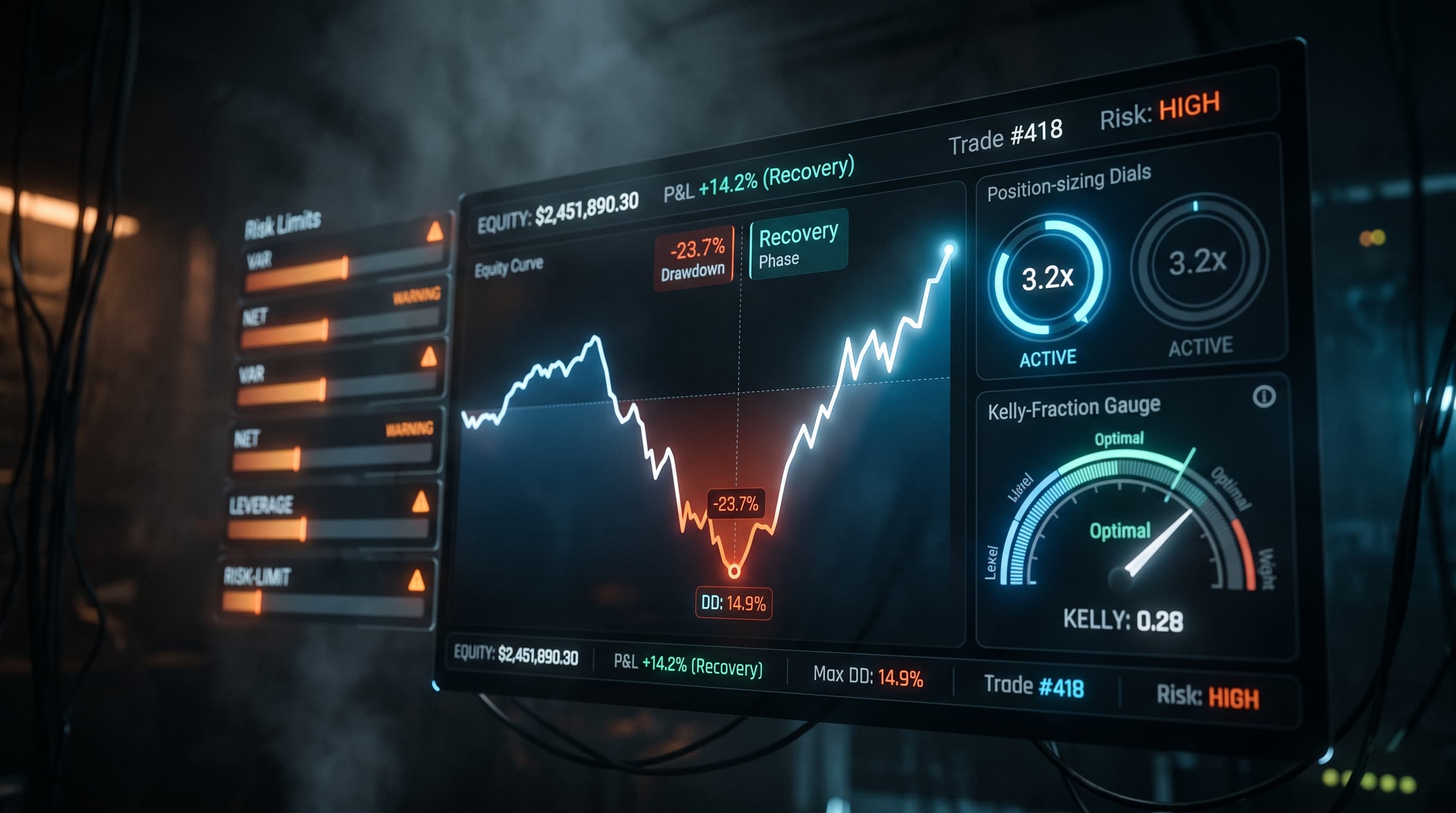
Start with less exposure than the backtest says you can tolerate. Live uncertainty is wider than modeled uncertainty. Use the position-sizing and risk-management framework before increasing size.
Step 9: Make the Agent Monitor Decisions, Not Just PnL
Profit can hide a bad process, and a loss can come from a sound probabilistic decision. Ask the agent to monitor both outcomes and decision quality.
A useful recurring review asks:
Summarize current exposure, open orders, recent fills, PnL, drawdown, stale
data, rejected orders, and any difference between live behavior and the
approved strategy. Separate execution problems from forecasting errors.
Recommend hold, pause, or investigate. Do not change the strategy.
The trading journal should capture what the agent knew at decision time. Review calibration by probability bucket, not only win rate. A strategy that buys contracts around 60% should win roughly 60% of comparable decisions over a sufficiently large sample—before asking whether the prices paid made those wins profitable.
Use the process in our prediction-market trading-journal guide to separate decision quality from outcome luck.
The Best AI-Agent Prompts for Prediction-Market Trading
Good prompts define the stage, the allowed actions, and the evidence required to advance.
Research a market without trading
Research this market and its resolution rules. Build an independent
probability range, list the strongest evidence on both sides, and identify
what new information would change the range. Do not create, update, or
deploy a strategy.
Draft a strategy with conservative defaults
Turn this thesis into a Studio-ready strategy. Use explicit entries, exits,
data freshness rules, and position limits. If I omitted a risk parameter,
choose a conservative default and label it as an assumption. Do not deploy.
Interpret a backtest honestly
Explain this backtest to a skeptical trader. Report fees, fill assumptions,
drawdown, trade concentration, and the worst period. Tell me what would make
you reject the strategy and what single follow-up test has the most value.
Prepare a cautious deployment
Check that the approved strategy version, risk limits, runner readiness, and
venue setup match the reviewed backtest. Preview a paper deployment only.
Show me every warning and wait for my explicit confirmation.
Audit a live agent
Compare recent live decisions with the approved strategy and backtest
assumptions. Flag drift, stale inputs, unexpected fills, concentrated
exposure, and repeated failures. Do not change or stop anything without a
new preview and confirmation.
What an AI Trading Agent Should Never Be Allowed to Do
The most dangerous agent is not the least intelligent one. It is the one with vague goals, broad permissions, and no independent controls.
Do not let an agent:
- invent or silently increase its own risk budget;
- trade a contract whose resolution rules it cannot explain;
- paste, store, or repeat exchange credentials in conversation;
- optimize against live capital without a reviewed strategy version;
- treat last-trade price as guaranteed execution;
- remove fees or realistic fill assumptions to rescue a backtest;
- deploy from an ambiguous instruction such as “make it more aggressive”;
- retry a consequential action blindly after an uncertain response;
- hide rejected orders, stale data, or deviations from the approved logic;
- promise a profit, win rate, or maximum loss the system cannot guarantee.
Turbine MCP intentionally keeps payment details, venue credential setup, deposits, and withdrawals on turbinefi.com. MCP also respects account ownership and membership limits. Those boundaries are part of the product, not obstacles for the agent to route around.
The Turbine risk guide covers the limits an agent should preserve from strategy design through deployment.
Is Meta Muse Really a Trading Breakthrough?
Yes—but as an interface breakthrough, not a new source of alpha.
Muse does not prove that a general-purpose AI can forecast elections, sports, inflation, or weather better than a specialized model. Meta itself says agents can make mistakes, and its security architecture assumes the agent may encounter hostile content. A more capable agent can also make a larger mistake faster.
What Muse proves is that the industry is converging on a usable shape for AI action:
- persistent compute instead of a disposable chat response;
- connectors instead of copy-and-paste;
- tools instead of pure text generation;
- background work instead of one synchronous turn;
- audit trails and permission gates instead of blanket trust.
Prediction-market trading needs exactly that shape. The work spans research, structured strategy design, historical testing, live execution, and ongoing review. MCP supplies a standard bridge from the agent to the specialized trading system. The trading system supplies deterministic calculations, account boundaries, and confirmation controls. The human supplies the thesis, capital, and final authority.
That division of labor is the real advance.
Start With the Agent, Keep Control of the Trade
You no longer need to choose between a chat assistant that cannot act and a black-box bot you cannot interrogate. An MCP-connected AI agent can help move a prediction-market idea through research, specification, backtesting, paper trading, deployment, and monitoring while keeping consequential actions behind explicit approval.
The edge still has to come from somewhere: better data, a better model, a structural market relationship, superior execution, or specialized knowledge. MCP does not manufacture alpha, and Muse does not abolish risk. What the new agent stack changes is how quickly a trader can turn a thesis into a controlled, inspectable experiment.
Connect an AI agent with Turbine MCP, see how Turbine builds AI prediction-market bots, or open Turbine Studio to build and backtest the strategy first.
FAQ
Can an AI agent trade prediction markets for me?
An AI agent can research markets, draft explicit strategies, run backtests, monitor live behavior, and request supported trading actions when connected to the right tools. It should operate inside fixed account, risk, and confirmation boundaries. No agent can guarantee profitable trades, and important actions should remain subject to human approval.
What is MCP for prediction-market trading?
MCP is an open standard that lets an AI application connect to external data, tools, and workflows. In prediction-market trading, an MCP server can give a compatible agent structured access to strategies, backtests, research, trading journals, deployment state, and supported actions without forcing the model to scrape a dashboard or invent private APIs.
Does Meta Muse connect directly to Turbine MCP?
Meta has not documented direct compatibility between Muse and Turbine MCP. Muse is relevant because it demonstrates the broader move toward persistent, tool-using agents with connectors and permission controls. To use Turbine MCP today, choose a compatible AI client that supports remote Streamable HTTP MCP servers and OAuth.
Is an AI agent better than a prediction-market trading bot?
They serve different roles. An AI agent is better at research, ambiguous questions, tool coordination, and explaining results. A deterministic bot is better at enforcing fixed rules repeatedly and quickly. The strongest setup uses the agent to build and supervise a strategy while deterministic software handles calculations, limits, and execution.
How do I trade prediction markets with an AI agent safely?
Begin with a narrow thesis, verify the contract rules, define explicit risk limits, backtest the exact strategy, challenge the assumptions, and paper trade it. For live deployment, use a preview-and-confirm workflow, start with small exposure, and monitor both execution quality and decision quality. Never place credentials or seed phrases in the agent conversation.
Can MCP bypass my Turbine plan or exchange setup?
No. Turbine MCP applies the authenticated account's ownership, membership, usage, and bot limits. Venue credentials and funding must already be configured through the website's guided flows. MCP does not accept payment details, deposits, withdrawal instructions, private keys, or exchange credentials through the AI conversation.
This article is for informational and educational purposes only. It is not financial or investment advice. Prediction-market trading and automation carry risk of partial or total loss. Backtests are hypothetical, depend on their assumptions, and do not guarantee future performance. Verify current venue rules, fees, legal availability, and contract terms before trading.