When Not to Trade: Weekend, Holiday, and Overnight Liquidity Patterns on Kalshi and Polymarket (2026)
 Ryan Bajollari
Kalshi and Polymarket hit ~$24B monthly volume by April 2026, but liquidity isn't spread evenly. Here's when books thin out — and the filters to add.

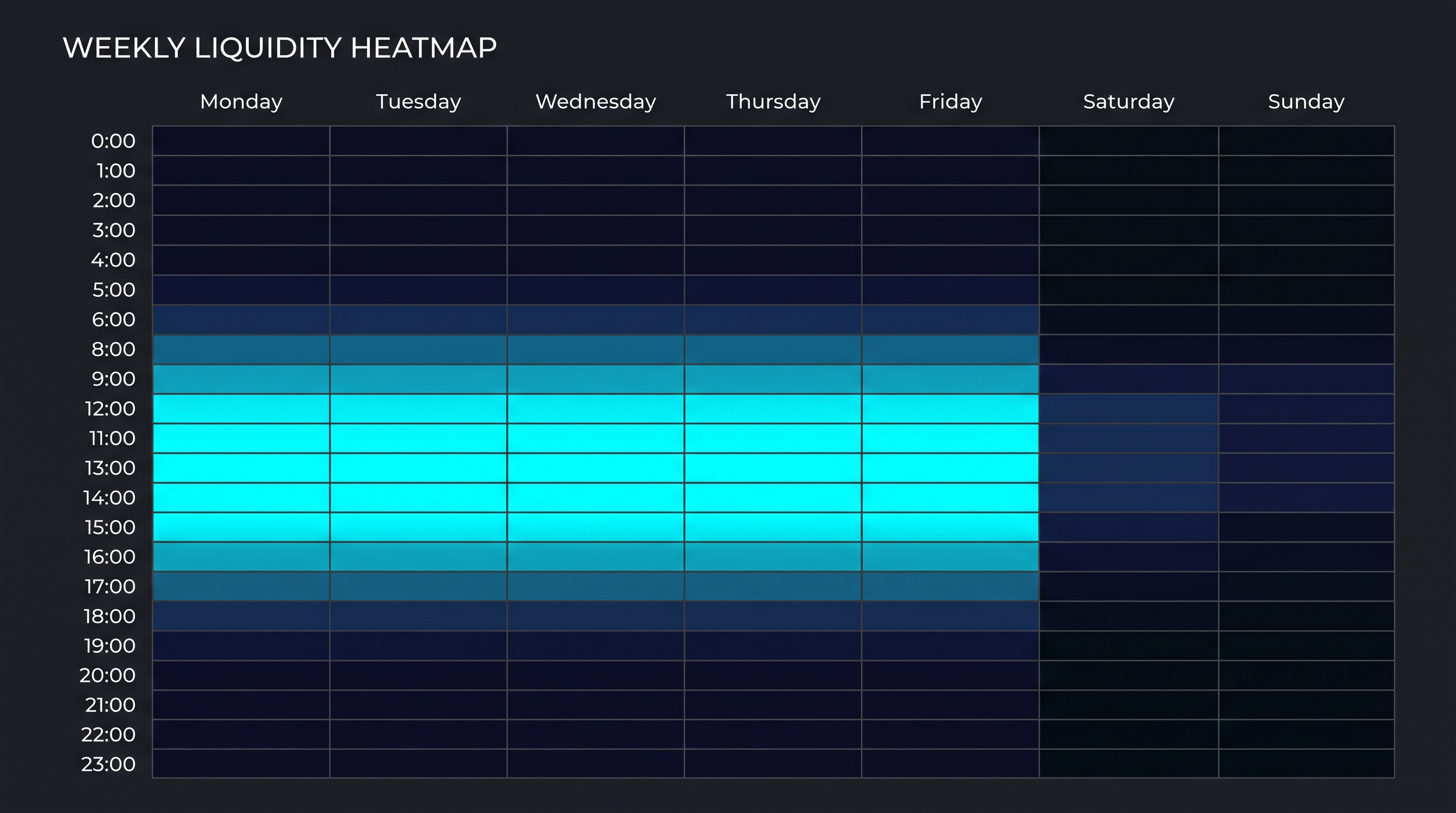
Combined monthly volume on Kalshi and Polymarket grew from under $5 billion in September 2025 to roughly $24 billion by April 2026 (Pew Research Center, 2026). That headline number hides something every bot builder eventually learns the hard way: liquidity isn't spread evenly across the week. It pools around catalysts and drains away from them — on a schedule you can print out.
We've already written about the sudden kind of liquidity collapse — the October 2025 crash, where spreads widened 1,321x in 40 minutes. That's the unpredictable regime shift. This post is about the opposite: the routine thinness. Weekends. US holidays. The overnight hours when American desks are asleep. These windows recur every single week, they're fully predictable, and most bots trade straight through them anyway.
Key Takeaways
- Kalshi + Polymarket monthly volume hit ~$24B by April 2026, up from under $5B in September 2025 (Pew Research Center, 2026)
- Category determines the calendar: Kalshi's volume is 80% sports, so its weekends are busy; economic markets go dead because CPI and NFP only print on weekdays
- The crypto analog is stark — Bitcoin's weekend volume share fell to 16% in 2024, an all-time low, as institutions concentrated in US hours (Kaiko via The Block, 2024)
- After-hours equity spreads average ~58 bps versus ~8.4 bps in regular sessions — roughly 7x wider — and the same maker-withdrawal mechanism operates on prediction markets (arXiv, 2026)
- Simple day-of-week and time-of-day filters cost nothing to add and remove your worst fills
Why Liquidity Follows the Calendar, Not the Clock
The direct answer: liquidity lives where professional market makers are active, and market makers follow catalysts and working hours. TRM Labs' on-chain analysis found that high-frequency market makers — accounts with more than 10,000 trades — generated 35.2% of prediction-market activity, about $774 million in their sample (TRM Labs, 2026). That's the cohort that steps away when nothing is scheduled to happen.
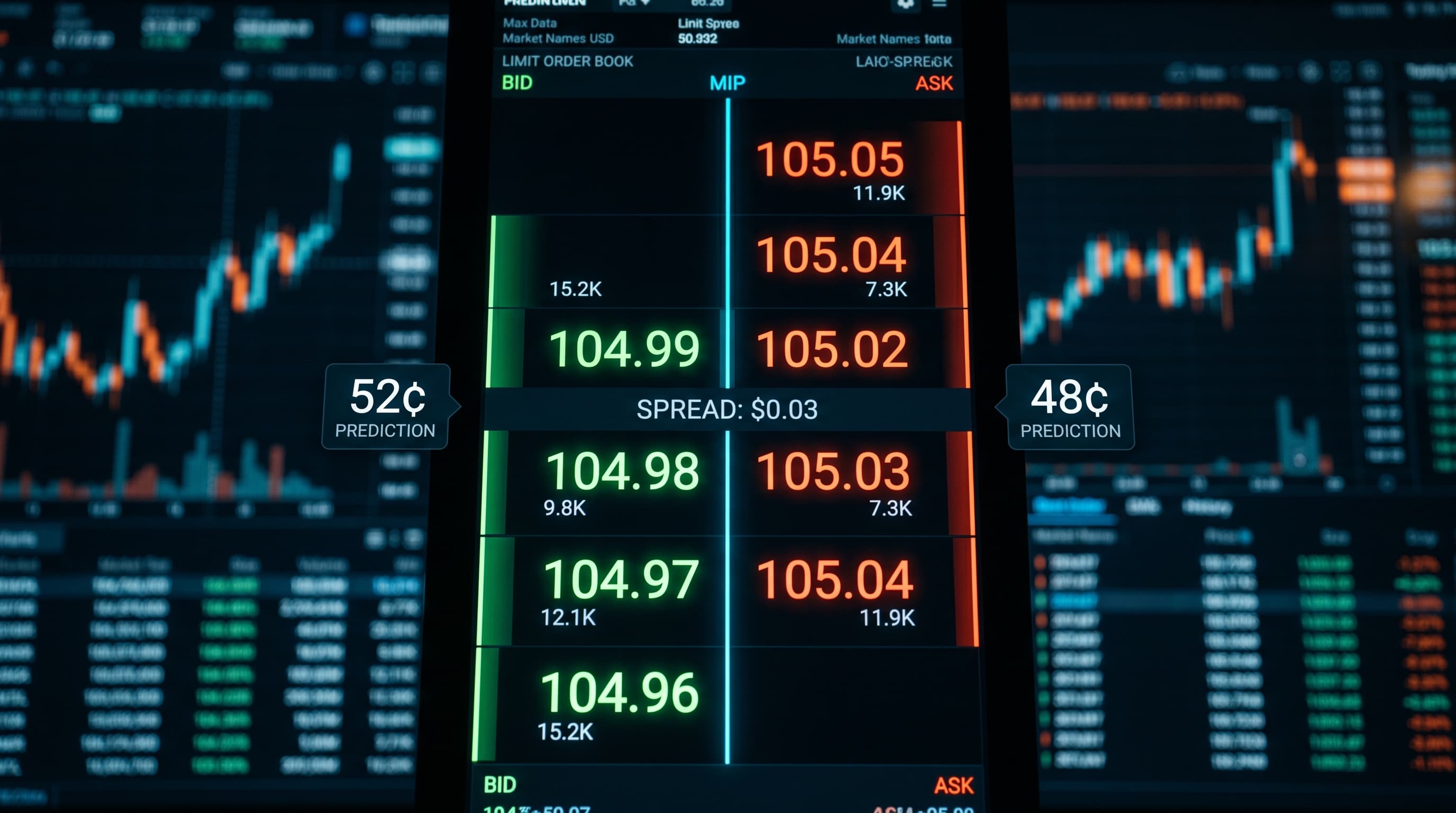
When they step away, the book doesn't disappear. It gets thin. Quotes widen, depth at the touch shrinks, and your market order that filled at one tick of slippage on Tuesday afternoon now walks three levels on Sunday at 3 a.m. Nothing crashed. Nobody panicked. The professionals just went home.
Citation capsule: High-frequency market makers (10,000+ trades) produced 35.2% of prediction-market trading activity in TRM Labs' 2026 analysis of on-chain data. When this single cohort reduces activity — overnight, on holidays, between catalysts — roughly a third of the market's normal flow goes with it (TRM Labs, 2026).
The growth numbers make this more important, not less. Monthly volume went from roughly $1.2 billion in early 2025 to over $20 billion by January 2026, with about 840,000 unique monthly wallets by February — a tripling in six months (TRM Labs, 2026). More volume means the contrast between peak and trough hours grows too. A market that's deep at 2 p.m. Tuesday and empty at 4 a.m. Sunday punishes naive bots harder than one that's uniformly mediocre.
Weekends: It Depends Entirely on the Category
Here's where prediction markets break the traditional-finance intuition. In equities, weekends are simply closed. In crypto, weekends are open but hollowed out. On Kalshi and Polymarket, weekend liquidity depends on what the contract resolves on — and the two platforms have very different mixes.
Pew's analysis of platform data from July 2024 through April 2026 found Kalshi's volume was 80% sports, 7% crypto, and 4% politics. Polymarket's international platform split differently: 39% sports, 32% politics, and 20% crypto (Pew Research Center, 2026).
| Category | Kalshi (share of volume) | Polymarket intl (share of volume) | Weekend catalysts? |
|---|---|---|---|
| Sports | 80% | 39% | Yes — NFL, NBA, college slates |
| Politics | 4% | 32% | Rarely |
| Crypto | 7% | 20% | Underlying trades, but volume thins |
Source: Pew Research Center analysis of platform data, Jul 2024 – Apr 2026.
That 80% sports number inverts the usual advice. NFL Sundays, Saturday college football, and weekend NBA slates mean Kalshi's aggregate weekend liquidity can be excellent. The weekend problem is concentrated in specific categories:
- Economic markets go dead. CPI, jobs reports, and Fed decisions only happen on weekdays — BLS publishes CPI at 8:30 a.m. ET on scheduled weekday mornings (BLS release schedule, 2026). A weekend economic-contract book has zero scheduled catalysts and the makers know it. If you trade these, our economic events guide covers the weekday rhythm in detail.
- Equity-linked contracts have nothing to track. S&P and Nasdaq range markets reference an underlying that's closed. Price discovery stalls; whatever quotes remain are wide and defensive.
- Crypto contracts stay open but thin out. The underlying trades 24/7, yet Bitcoin's weekend spot volume share fell to an all-time low of 16% in 2024, down from a 28% peak in 2019, as spot ETF approvals pulled institutional flow into US weekday hours (Kaiko via The Block, 2024).
Related Kaiko research found the share of BTC liquidity on US exchanges rose to 45% during the ETF-led rally, up from 35% a year earlier (Kaiko, 2024). Crypto's price discovery increasingly happens on a US weekday schedule — and Kalshi's crypto contracts, plus Polymarket's, inherit that rhythm.
Overnight: The Book Doesn't Close, the Makers Do
Prediction markets never close, which tempts people into thinking they're equally tradeable at all hours. The equity extended-hours literature shows exactly what happens when a venue stays open past its makers' bedtime: a 2026 study of US after-hours trading found post-close quoted spreads averaging around 58 basis points against roughly 8.4 basis points during regular hours — about 7x wider (arXiv, 2026). IOSCO's May 2026 report on extended trading hours reached the regulator-consensus version of the same conclusion: extended sessions are characterized by lower liquidity and wider bid-ask spreads than regular hours (IOSCO, 2026).
The mechanism transfers directly. Overnight (roughly 1 a.m. to 7 a.m. ET), US-based makers widen or pull quotes. Polymarket keeps trading globally through those hours, so books rarely go fully empty — but depth is retail-thick, not maker-thick. That's precisely when a resting limit order is most likely to be picked off by faster traders on stale news, with no maker flow around to keep the price honest.
Overnight isn't uniformly bad, though. For a strategy that provides liquidity, thin hours are where the spread income is — that's the whole premise of market making on prediction markets. The calendar tells takers when to stand down and makers when the pay improves. Same data, opposite conclusion depending on which side of the book you're on.
Holidays: The Most Predictable Dead Zones of the Year
The 2026 US equity calendar has 10 full market holidays plus two scheduled early closes — November 27 and December 24, when NYSE markets close at 1:00 p.m. ET (NYSE, 2026). SIFMA recommends additional early closes for bond markets around several of those holidays (SIFMA, 2026).
Why does an equity holiday matter for a market that never closes? Because it removes the catalysts and the professionals simultaneously. No economic releases print. Equity-linked contracts have no underlying to track. Trading desks run skeleton crews. A Thanksgiving Friday on a Kalshi economic contract combines a weekend-grade catalyst vacuum with holiday-grade staffing — it's the thinnest routine window of the year.
Citation capsule: In 2026, US equity markets observe 10 full holidays and two early-close sessions (Nov 27 and Dec 24, closing 1:00 p.m. ET), per the NYSE holiday calendar. For prediction-market traders, these dates are advance notice of catalyst-free, thin-book conditions in economic and equity-linked contracts (NYSE, 2026).
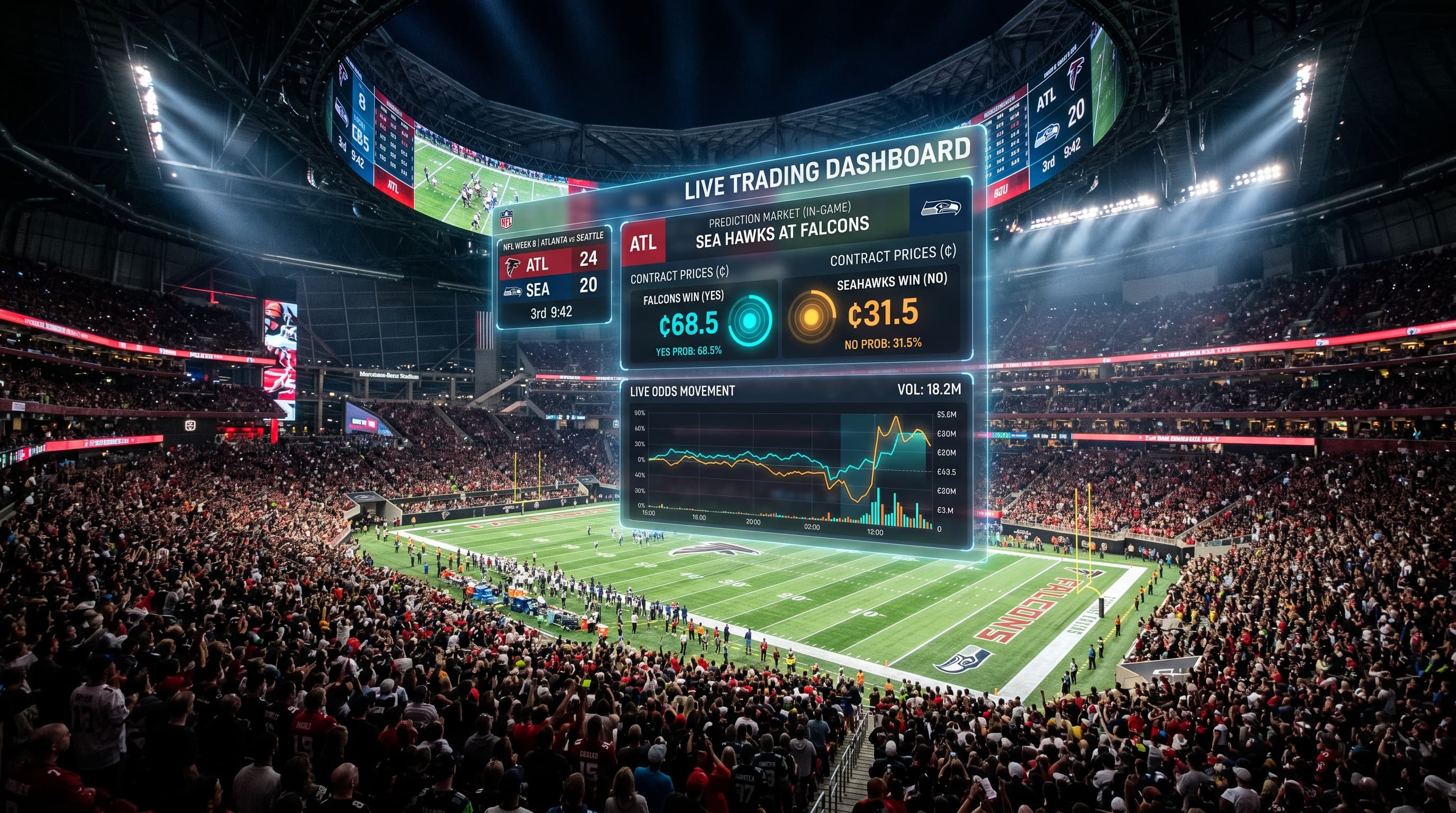
The exception, again, is sports. Thanksgiving NFL games and Christmas NBA games are among the highest-attention sporting events of the year. A sports-heavy book on those days can be deep and active while the economic book two tabs over is a ghost town. The calendar filter has to be per category, not global.
The Filters: Encoding the Calendar Into Your Strategy
You don't need a liquidity model to capture most of this edge. You need a handful of boolean conditions. Here's the practical version:
- Day-of-week filter, per category. Economic and equity-linked strategies: trade Monday–Friday only. Sports strategies: weekends are often your best window. Crypto strategies: expect roughly half the participation on weekends and size down accordingly.
- Time-of-day filter. For taker strategies on US-centric contracts, restrict entries to roughly 8 a.m.–11 p.m. ET. If your edge survives a backtest without the overnight hours, those hours were costing you.
- Holiday blacklist. Hard-code the 10 US market holidays and the half-days. Skip economic and equity-linked entries the day before and after major ones. Ten dates a year is a trivially small config for removing your worst fill conditions.
- Spread guard as a backstop. Calendar filters are the schedule; a max-spread condition is the safety net. If the quoted spread exceeds your threshold at signal time, skip the trade regardless of the date. This also catches the unscheduled thinness that killed bots in October 2025.
When we backtest strategies internally on historical order-book data, adding a simple "skip if spread > threshold" condition is routinely the single highest-impact one-line change for taker strategies — it doesn't add winners, it deletes the losers that cluster in thin windows. The right way to prove this for your own strategy is to backtest it with and without the filters and compare fill quality, not just PnL.
In Turbine Studio, these conditions are expressible directly in a strategy's entry logic — day-of-week, time windows, and spread thresholds — and you can verify their impact on historical Kalshi and Polymarket order-book data before risking anything, or run the filtered strategy in paper trading mode first.
Test Your Timing Filters Before the Market Tests Them for You
The whole point of calendar-based filters is that they're falsifiable in advance. You can backtest "no overnight entries" against months of real order-book history and see exactly what it changes.
Turbine Studio lets you build Kalshi and Polymarket strategies in plain English, add time-of-day, day-of-week, and spread conditions, backtest them against historical L2 order-book data, and deploy the winner as a live bot. Start with a paper-traded version, compare filtered versus unfiltered fills, and let the data tell you which hours your strategy should sleep through.
FAQ
Is weekend trading on Kalshi always low-liquidity?
No — it depends on category. Kalshi's volume is 80% sports (Pew Research Center, 2026), and NFL Sundays make weekends the busiest window for sports contracts. Economic and equity-linked contracts are the ones that go quiet, because their catalysts (CPI, NFP, market sessions) only occur on weekdays.
How much wider do spreads get in off-hours?
Prediction-market platforms don't publish session-level spread data, but the closest analog is measured: US equity after-hours quoted spreads average about 58 bps versus 8.4 bps in regular hours, roughly 7x wider (arXiv, 2026). The mechanism — professional makers withdrawing — operates identically on prediction markets overnight.
Does Polymarket's global user base fix the overnight problem?
Partially. Polymarket trades worldwide, so books rarely empty completely overnight. But high-frequency market makers generated 35.2% of prediction-market activity in TRM Labs' 2026 analysis (TRM Labs, 2026), and that cohort concentrates in US hours. Global retail presence isn't the same as maker depth.
Should market makers avoid thin windows too?
No — it's the opposite. Wide spreads are the market maker's compensation. Thin windows are when providing liquidity pays best, provided you widen quotes and cut size to survive the occasional informed flow. The calendar filters in this post are primarily for taker strategies that cross the spread.
What's the single easiest filter to add first?
A max-spread guard: skip any entry where the quoted spread exceeds your threshold. It automatically avoids thin calendar windows and unscheduled liquidity droughts, without maintaining any date list. Add the explicit holiday blacklist and time-of-day window after you've measured the spread guard's impact in a backtest.
Conclusion
- Liquidity on Kalshi and Polymarket follows catalysts and maker working hours — and both are on a published calendar.
- Category is everything: 80%-sports Kalshi has busy weekends, but economic, political, and equity-linked books thin out predictably on weekends and holidays.
- Overnight hours carry an off-hours spread tax; the equity analog is ~7x wider quoted spreads after hours.
- Four cheap filters — day-of-week per category, time-of-day, a holiday blacklist, and a max-spread guard — capture most of the benefit.
- Backtest the filters against real order-book history before trusting them. Predictable thinness is the easiest edge to verify.
This post is for informational purposes only and is not financial advice. Prediction market trading involves risk of loss. Past performance and backtested results do not guarantee future returns. Trade only with funds you can afford to lose.