How to Trade Kalshi Weather Markets: Temperature, Precipitation, and Hurricane Contracts (2026)
Most guides to Kalshi weather markets will tell you that temperature contracts settle on National Weather Service data. As of August 27, 2026, that's wrong — and if your bot is scraping the wrong endpoint, it's wrong in a way that costs money.
Kalshi's daily high and low temperature series now settle on The Weather Company, not the NWS (The Weather Company, Aug 2026). Precipitation and snowfall still settle on NWS. Hurricanes settle on the National Hurricane Center. Three verticals, three different settlement authorities, one exchange.
That split is the whole game. Kalshi's climate and weather vertical is up roughly 500% year over year and pacing toward $1.1 billion annualized (Kalshi, Aug 2026). Here's how the contracts actually resolve, where forecast-versus-market edge shows up, and what our own 500-strategy weather backtest says about which signals survive contact with real data.
**Key Takeaways** - Daily temperature settles on The Weather Company; precipitation and snow still settle on NWS climate reports; hurricanes settle on NHC advisories ([Kalshi API](https://api.elections.kalshi.com/trade-api/v2/series/KXHIGHNY), Sept 2026) - Station mappings contain traps — Chicago settles on Midway, not O'Hare, and Austin on Bergstrom, not Camp Mabry - In NOAA's 2018 Colorado Basin verification, the National Blend of Models beat GFS MOS at every lead time, and a 30-day bias correction bought another ~0.7°F ([NOAA CBRFC](https://www.cbrfc.noaa.gov/present/projects/NBM_Temperature.pdf), 2018) - Our 500-strategy backtest found weather data works as *confirmation*, not contradiction — four strategy families went 0-for-50 betting against the market
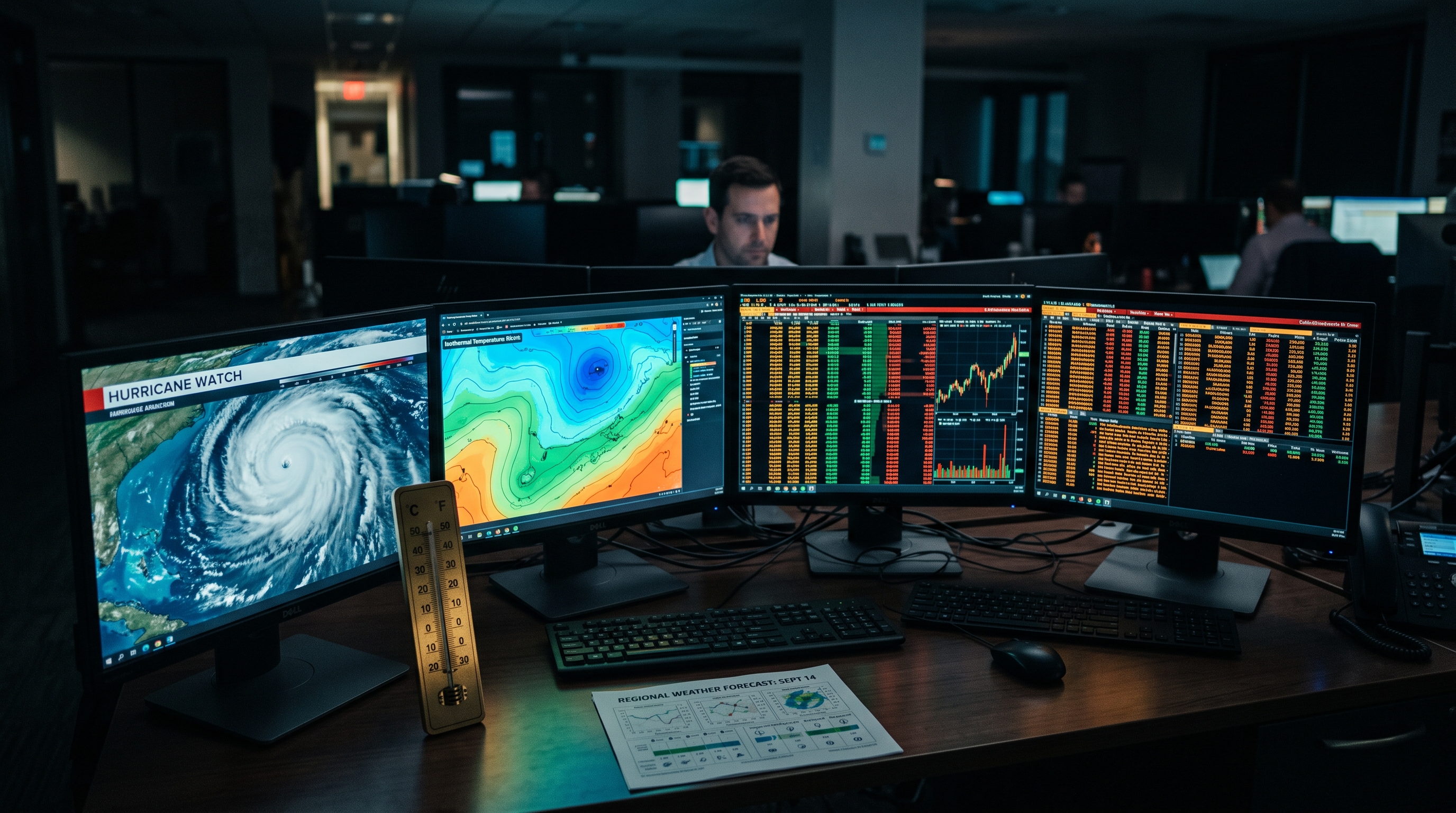
What Weather Contracts Can You Actually Trade on Kalshi?
Kalshi's "Climate and Weather" category returns more than 120 series tickers (Kalshi API, Sept 2026). Not all of them have open markets — several are legacy or seasonal — so query before you build.
Daily high temperature. KXHIGHNY, KXHIGHCHI, KXHIGHLAX, KXHIGHMIA, KXHIGHAUS, KXHIGHDEN, KXHIGHPHIL, plus Dallas, Phoenix, Seattle, San Francisco, New Orleans and Houston variants. These are the deepest, most consistently liquid weather markets.
Daily low temperature. KXLOWNYC, KXLOWLAX, KXLOWTDEN, KXLOWTMIA, KXLOWTPHX and siblings. Thinner than the highs. Note the inconsistent KXLOW and KXLOWT prefixes — another reason to match on exact tickers.
Hourly directional. KXHIGHNYD and KXTEMPDCH trade intraday temperature direction rather than a daily settle. Different rhythm entirely — these are closer to a crypto 15-minute market than a weather market.
Monthly precipitation. KXRAINNYCM, KXRAINCHIM, KXRAINDENM, KXRAINSEAM, KXRAINDALM. Note these are monthly totals, not daily.
Monthly and event snowfall. KXSLCSNOWM, KXASPSNOWM, KXALTASNOW for seasonal accumulation, and KXSNOWSTORM for individual events.
Hurricanes. KXHURCLAND, KXHURPATHGENERALMAJOR, KXHURPATHGULFCOAST, KXFIRSTHURRICANE and city-specific series for Miami, Savannah and Wilmington.
International. Mexico City (KXHIGHTMMMX), Singapore (KXHIGHTWSSS), Toronto (KXLOWTCYYZ), plus Paris, Amsterdam, Seoul, Mumbai, Brussels and Geneva all have listed temperature series (Kalshi API, Sept 2026).
**Build against tickers, not titles.** Kalshi's own series metadata contains at least one mislabeled entry — ticker `KXMIASNOWM` carries the title "Chicago Snowfall Monthly" ([Kalshi API](https://api.elections.kalshi.com/trade-api/v2/series?category=Climate%20and%20Weather), Sept 2026). If your discovery logic matches on human-readable titles, you will eventually subscribe to the wrong market. Match on ticker prefixes.
How Do Kalshi Weather Contracts Settle?
Three contract families, three settlement authorities. Daily temperature settles on The Weather Company, precipitation and snowfall on NWS climate reports, and hurricanes on National Hurricane Center advisories.
This is where most traders get it wrong, and it's the single highest-value thing to get right before you deploy capital.
Temperature: The Weather Company
Pull the settlement source for KXHIGHNY today and you get The Weather Company, pointing at weather.com/kalshi (Kalshi API, Sept 2026). Same for Chicago and Los Angeles. The live market rules text says the high will be determined "according to The Weather Company."
The station is still identified by its NWS climate report product ID — CLINYC, CLIMDW, CLILAX — but the reporting authority changed. The Weather Company says it supplies "authoritative observation data used to settle these markets with a consistent, documented methodology for each market type" (The Weather Company, Aug 2026).
Why Kalshi could swap the source at all: the rulebooks reserve the right to "designate a new Source Agency and Underlying for that Contract and to change any associated Contract specifications after the first day of trading" (Kalshi LTHUR rulebook), with parallel contingency language in the temperature rulebook. That flexibility is a feature for the exchange and a risk for you.
Worth seeing how live that risk is. KXHIGHNY's own linked rulebook still names the National Weather Service as Source Agency, while the market's rules text already says The Weather Company (Kalshi API, Sept 2026). The published PDF is stale relative to the live contract. Trust the market rules field, not the rulebook.
Precipitation and Snow: Still NWS
Monthly rain markets settle on the NWS Climatological Report. KXRAINNYCM points directly at the NWS product page for the New York CLI (Kalshi API, Sept 2026). Monthly snowfall settles on the NWS NOWData system, summing daily "New Snow" values (Kalshi NOWDATASNOW rulebook).
Two rules here will bite an unprepared bot. A trace reading ("T") counts as 0.00, and a missing reading ("M") also counts as 0.00. And resolution locks to whatever NOWData displays at the expiration time — later NCEI corrections, revisions, or quality-control adjustments don't change it.
The Station Traps
Every temperature market names a specific climate report product. Read them literally.
| City | Series | Settles on | Not |
|---|---|---|---|
| New York | KXHIGHNY | CLINYC — Central Park | LaGuardia or JFK |
| Chicago | KXHIGHCHI | CLIMDW — Midway | O'Hare |
| Los Angeles | KXHIGHLAX | CLILAX — LAX airport | Downtown / USC |
| Austin | KXHIGHAUS | CLIAUS — Bergstrom | Camp Mabry |
| Denver | KXHIGHDEN | CLIDEN — Denver Intl | — |
| Philadelphia | KXHIGHPHIL | CLIPHL — Philadelphia Intl | — |
Chicago and Austin are the ones that cost people money. Midway sits in denser urban fabric than O'Hare and typically runs warmer. Austin's longer-record, more-frequently-cited station is Camp Mabry — but the contract settles on Bergstrom. If you feed your model a forecast for the wrong station, you've introduced a systematic bias into every trade.
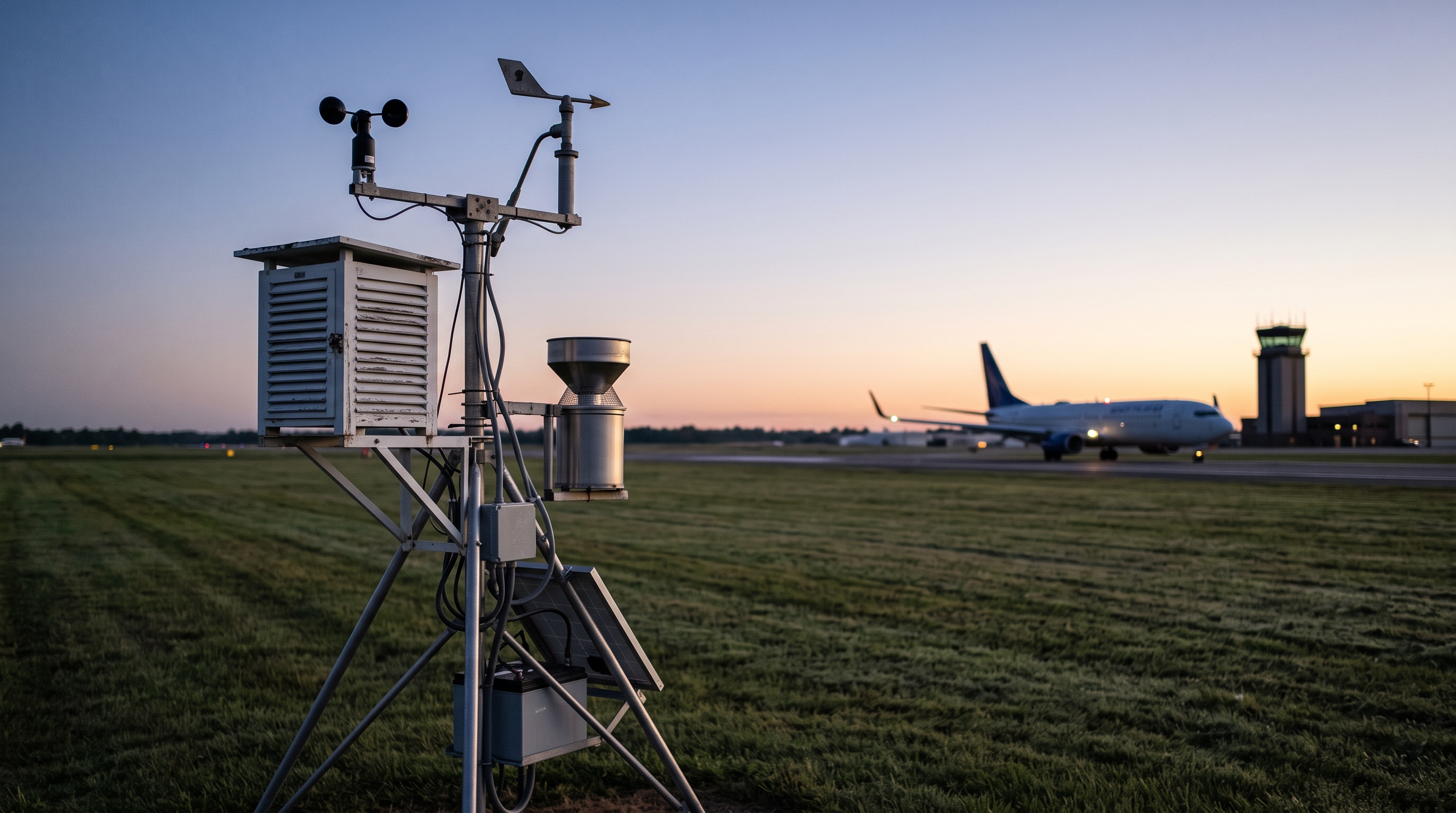
What Is the Settlement Timeline for a Daily Temperature Market?
Take a real market: KXHIGHNY-26SEP08-B80.5, the New York high for September 8, 2026 (Kalshi API, Sept 2026).
- Opens 10:00 AM ET the day before the observation day
- Closes 1:00 AM ET the day after
- Expected expiration 3:00 PM ET the day after
- Hard expiration backstop 10:00 AM ET seven days later
- Settlement timer 300 seconds
That example settles within days — the schedule pattern is what generalizes. Confirm it against any currently open market via the markets endpoint.
Summaries of these markets often describe them as settling "the next morning." The API is more specific: 3:00 PM ET the next day, with a one-week backstop. Trust the API field over any prose description.
Three rulebook provisions matter more than the schedule:
Revisions after expiration never count. Every weather rulebook carries the same line: revisions made after expiration "will not be accounted for in determining the Expiration Value" (Kalshi GLOBALTEMPERATURE rulebook).
Material errors can freeze a market. If Kalshi determines there's a material error in the initial publication, expiration "may be held until the publication of a non-materially-erroneous data revision or until the Expiration Date, whichever comes first" (Kalshi API, Sept 2026). If nothing arrives, markets resolve to the last fair price Kalshi determined.
"Final" isn't a guarantee. The live rules state that a "Final" status on weather.com/kalshi "is provided for convenience only, and does not guarantee data to be error-free" (Kalshi API, Sept 2026).
One cost note. Weather's natural pattern is hold-to-expiry rather than repeated round trips, so trading costs bite less here than in markets you move in and out of all day. Kalshi's fee structure has changed more than once, and the published schedule is the only authority worth trusting — check the current fee schedule before you size up.
Where Does Forecast Edge Actually Come From?
Here's the part traders underrate. Everyone reaches for GFS or ECMWF. The model that most directly underpins the number you're trading against is the National Blend of Models.
NBM runs hourly, at 2.5 km resolution over the continental US, out to 264 hours (NOAA NOMADS, 2026). NOAA describes its goal as creating "a highly accurate, skillful and consistent starting point for the gridded forecast" — the substrate under NWS public point forecasts (NOAA MDL, 2026). It reached version 5.0 in May 2026 (NOAA MDL, 2026).
And in NOAA's Colorado Basin verification, NBM beat GFS MOS at every lead time.
Three things that chart tells a bot builder:
1. NBM outperformed GFS MOS at every horizon in that study. Not dramatically, but consistently. If you're pulling raw GFS and doing your own downscaling, you're likely doing worse than a free NOAA product.
2. A 30-day bias correction was worth roughly 0.7°F at short leads. NOAA's method is stated plainly: compute the average Day 1 bias over the past 30 days, then apply it to all lead times in the current run (NOAA CBRFC, 2018). On a market where strikes are spaced a degree or two apart, that's the difference between a coin flip and an edge. It's also about fifteen lines of code.
3. Skill decays toward climatology by day 10. The raw-model advantage is essentially gone by then. Any long-dated weather contract is priced off climatology whether you model it that way or not.
Fair warning on that data: it's a 2018 study over the Colorado Basin, a mountainous region where errors run higher than the national average. The direction holds; the exact numbers are regional. A broader national picture puts seven-day max-temperature errors at "about 5 to 6 degrees Fahrenheit" and three-to-four-day errors "within about 3 to 4 degrees" (Penn State METEO 3, citing WPC, 2017).
The Model Menu
| Model | Runs/day | Resolution | Horizon | Free |
|---|---|---|---|---|
| NBM | 24 (hourly) | 2.5 km CONUS | 264 h | Yes |
| HRRR | 24 (hourly) | 3 km | 18 h hourly, 48 h every 6 h | Yes |
| GFS | 4 (00/06/12/18Z) | ~13 km to day 10 | 384 h | Yes |
| ECMWF IFS | 4 (00/06/12/18Z) | 0.25° open tier | 360 h at 00/12Z, 144 h at 06/18Z | Yes, since Oct 2025 |
Sources: NOAA NOMADS and NOAA GFS documentation, 2026; ECMWF open data catalogue, 2026; HRRR specifications from AMS Weather and Forecasting, 2022.
ECMWF is the notable change. On October 1, 2025 it opened its entire real-time catalogue under CC-BY-4.0 — no information cost, commercial use permitted (ECMWF, 2025). The free tier is 0.25° GRIB2, with 9 km native resolution planned later in 2026. That includes the 50-member ensemble (ECMWF open data, 2026), which is the piece worth having: a distribution across members maps far more naturally onto a strike ladder than a single deterministic run.
One practical trap. NBM's max temperature field covers 12Z current day through 06Z next day, reported at 00Z (NOAA MDL). That window is not the calendar day the contract settles on. Align them yourself.
Why Weather Is Unusually Friendly to Automation
Compare weather to the other Kalshi verticals and the structural advantages stack up fast.
The data arrives on a published schedule. GFS at 00/06/12/18Z. ECMWF on the same cycles. NBM hourly. HRRR hourly. You know exactly when new information lands, which means you can schedule around it instead of polling blindly. Few things in economic event contracts or sports markets are this predictable.
Settlement is a published number rather than an oracle vote. A temperature contract resolves to a reading from an instrument, so the failure modes we covered in how prediction markets resolve mostly don't apply. Though as the material-error provisions above show, Kalshi retains real discretion in edge cases.
There's no insider risk in the usual sense. Nobody has private knowledge of tomorrow's high in Chicago. The models are public, the observations are public, and the edge is entirely in processing rather than access.
That last point needs an asterisk, though.
**Weather's version of insider risk is physical, not informational.** In April 2026, Météo-France filed a criminal complaint over suspected "tampering of an automated data processing system" at the Paris-Charles de Gaulle weather station. Readings at the sensor jumped about 4°C in twelve minutes on two April evenings, reaching 22°C both times while nearby stations showed no such change, and traders on Polymarket profited on both spikes ([NPR](https://www.npr.org/2026/04/23/nx-s1-5797876/polymarket-paris-weather-bet), Apr 2026). No one can front-run the weather. Someone can, allegedly, point a heat source at the thermometer. Single-sensor settlement is a genuine attack surface — favor markets whose stations sit inside secured airport perimeters, and treat a record-breaking reading that no model predicted as a reason to check the news, not to celebrate.
What Our Own Backtest Found
We ran 500 strategies against Kalshi's New York high-temperature market using National Weather Service data from LaGuardia as the weather feed. Ten families, fifty variants each, same market and date range (Turbine, May 2026).
One caveat we should name before the results, because this post just spent a section on it: that sweep used the LaGuardia feed, not Central Park. By the standard set in the station table above, it was reading the wrong thermometer. It also ran in May 2026, before the August source change this post opens with. The findings below are directional rather than production-grade — and they're their own illustration of how easy the station trap is to fall into.
The headline result was humbling: only 70 of 500 finished positive, and the median ROI was −41.61%. Most plausible-sounding weather ideas are junk until proven otherwise. ROI there is normalized to each strategy's configured risk capital over a single window on one series, so the ordering matters more than the exact percentages.
But the failures weren't random, and the pattern is the most useful thing we can hand you.
**Our finding:** The winning family was the boring one. "Hot Forecast Breakout" — buy YES when the forecast is hot and YES is still cheap — produced 22 profitable variants out of 50, more than any other family, and the single best strategy in the run returned **+117.75%**. Its entire logic was three conditions: forecast high above 77°F, YES price below 42¢, reasonably tight spread. Meanwhile four families went **0-for-50**: Cool Forecast Fade, Rain Pressure NO, Temperature Shortfall NO, and Warm-Up Chase. Every one of them tried to bet *against* the market on a single bearish weather variable.
The lesson isn't "use weather data." It's narrower than that: weather data works as confirmation, not contradiction. Hot forecast plus cheap YES beat cool forecast plus stubbornly expensive market, every time. When a market stays expensive against your weather signal, the market usually knows something your rule doesn't.
The most interesting family was also the most dangerous. "Price-Weather Mismatch," which could trade either side when price and weather disagreed, produced 16 winners including a +107.32% variant — and also the worst strategy in the entire run at −235.05%. Flexible logic finds real dislocations and real disasters in roughly equal measure. Keep it on a short leash.
That's the practical starting point: baseline on forecast-confirms-price, demand much stronger evidence before taking NO-side trades, and validate everything before it touches capital. Our guide to why backtests lie covers the overfitting traps that make 500-strategy sweeps like this one dangerous to read naively.
How Do Hurricane Contracts Work?
Hurricane markets are the most mechanically specific contracts on the board, and the rulebooks reward reading.
Season window. Contracts are listed to coincide with hurricane season, June 1 to November 30 (Kalshi LTHUR rulebook). Atlantic activity peaks around September 10 (NHC).
What reads the wind. The rulebook gives a literal scraping procedure (Kalshi LTHUR rulebook): open the NHC storm archive, find the Discussion, locate the row marked INIT. The max sustained wind is the number preceding "MPH," and the coordinates on that row give position. Saffir-Simpson thresholds are specified in the contract — Cat 1 at 74 mph, Cat 2 at 96, Cat 3 at 111, Cat 4 at 130, Cat 5 at 157.
Path contracts are geometric. KXHURPATH markets don't resolve on "landfall" in the colloquial sense. They resolve on a track segment — a straight line between two consecutive NHC advisory coordinates. That segment must intersect or terminate inside a region defined by US Census county shapefiles, while the storm is at or above the wind threshold (Kalshi HURPATH rulebook). A storm weakened to tropical storm before entering the region doesn't count. A track passing adjacent to but not crossing the boundary doesn't count. And post-storm reanalysis coordinates don't count — advisories only.
The backup source list is unusual. KXHURPATHGENERALMAJOR names thirteen settlement sources, in this order: NHC, NWS, NOAA, then The Weather Channel, AccuWeather, CNN Weather, AP, Reuters, the New York Times, Washington Post, Wall Street Journal, Bloomberg and NBC (Kalshi API, Sept 2026). Major media outlets are literal named fallbacks.
One timing note for 2026. NOAA's August update called for a below-normal Atlantic season: 7 to 13 named storms, 2 to 6 hurricanes, and 0 to 2 major hurricanes. It put the odds of below-normal activity at 75%, driven by a strong El Niño (NOAA CPC, Aug 2026). Against a 1991–2020 average of 14 named storms and 7 hurricanes (NHC), that's a thin season. Several hurricane series had no open markets when we queried in September. Check before you plan a strategy around them.
Building a Weather Bot Without Building Infrastructure
Weather is the vertical where automation pays off most, because the work is unglamorous and relentless: pull the 06Z run, align the max-temp window to the contract day, apply your rolling bias correction, compare to the strike ladder, size the position, submit, and do it again in an hour. Forever.
Position limits are worth knowing before you scale. The temperature, snow and hurricane-path rulebooks set a $25,000 per strike, per member Position Accountability Level — an accountability threshold, not a hard cap (Kalshi GLOBALTEMPERATURE rulebook). The long-term hurricane rulebook differs: a flat $25,000 per member Position Limit (Kalshi LTHUR rulebook).
**From our experience:** The traders who do best in weather markets aren't the ones with the best model. They're the ones who correctly mapped station to contract, aligned their forecast window to the settlement window, and resisted the urge to fade the market on a single bearish variable. Our backtest is blunt about this — the clever contrarian families lost 100% of the time, and the boring confirmation family won more than any other. Get the plumbing right and trade the obvious setup.
Turbine Studio lets you describe a strategy in plain English, compile it to executable logic, and backtest it against historical order book data before risking capital — including strategies that pull external data like NWS observations. That's the same engine that produced the 500-strategy sweep above.
Build a weather strategy on Turbine Studio
If you're starting from zero, our Kalshi bot build guide covers the infrastructure layer, and why Kalshi is built for automated trading explains why the API makes this practical in the first place.
Frequently Asked Questions
What data source settles Kalshi temperature contracts?
As of August 27, 2026, daily high and low temperature series settle on The Weather Company, not the National Weather Service (Kalshi, Aug 2026). The station is still identified by its NWS climate report ID, but the reporting authority changed. Precipitation and snowfall contracts still settle on NWS data.
Which weather station does each Kalshi city market use?
New York settles on Central Park (CLINYC), Chicago on Midway rather than O'Hare (CLIMDW), Los Angeles on LAX (CLILAX), and Austin on Bergstrom rather than Camp Mabry (CLIAUS). The station ID appears verbatim in each market's rules text, so read it rather than assuming the city's best-known station.
Which forecast model is best for trading weather contracts?
The National Blend of Models beat GFS MOS at every lead time in NOAA's Colorado Basin verification (NOAA CBRFC, 2018). It runs hourly at 2.5 km resolution and is the substrate under NWS public forecasts (NOAA MDL, 2026). Adding a 30-day rolling bias correction improved accuracy by roughly 0.7°F at short lead times in that same study.
How long before a weather contract settles?
A daily New York temperature market opens 10:00 AM ET the day before, closes 1:00 AM ET the day after, and has an expected expiration of 3:00 PM ET the day after — with a hard backstop one week out (Kalshi API, Sept 2026). Revisions published after expiration never count.
Can weather markets be manipulated?
Informationally, no — nobody knows tomorrow's temperature. Physically, possibly. Météo-France filed a criminal complaint in April 2026 over suspected tampering at the Paris-CDG station, after readings jumped about 4°C in twelve minutes to 22°C on two April evenings (NPR, Apr 2026). Single-sensor settlement is a real attack surface.
Are weather contracts affected by the CFTC sports betting litigation?
No. The April 2026 Third Circuit ruling on CFTC exclusive jurisdiction concerned sports-related event contracts (Paul, Weiss, 2026). Weather has not been the contested category in that litigation. Kalshi self-certifies weather contracts under CEA Section 5c(c), filed through the CFTC portal (CFTC filing, Feb 2026).
Weather Is the Most Automatable Vertical on Kalshi
The edge in weather markets isn't a better forecast. It's a correctly wired pipeline plus the discipline to trade only the setups that survive testing.
- Temperature settles on The Weather Company; rain and snow on NWS; hurricanes on NHC advisories — three different authorities on one exchange
- Station mappings contain real traps: Chicago is Midway, Austin is Bergstrom, and getting it wrong biases every trade
- In NOAA's Colorado Basin verification, NBM beat GFS MOS at every lead time, and a 30-day bias correction was worth another ~0.7°F for about fifteen lines of code
- Forecast skill dies around day 10, so long-dated contracts are climatology whether you model them that way or not
- Our 500-strategy backtest found confirmation beats contradiction — four contrarian families went 0-for-50 while the boring "hot forecast, cheap YES" family produced the best strategy in the run
Kalshi's weather vertical grew roughly 500% year over year and is pacing toward $1.1 billion annualized. That growth brings competition, but it also brings liquidity to markets that were untradeable two years ago. The traders capturing it are running scheduled pipelines against free government models — not making calls about the sky.
Start building on Turbine Studio, or read the full 500-strategy weather backtest for the underlying research.
This post is for informational purposes only and does not constitute financial, legal, or tax advice. Prediction market trading involves risk of loss, including total loss of invested capital. Contract specifications, settlement sources, and series tickers change — verify current terms on Kalshi before trading. Backtest results are simulations and do not indicate future results. Consult a financial advisor for advice specific to your situation.